

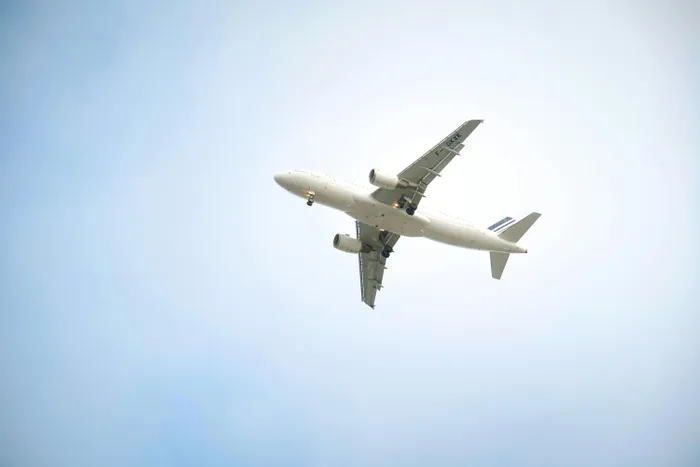
A woman carrying the hantavirus deteriorated during a flight to Johannesburg on April 25.
Image: File
Global health authorities have launched an urgent contact-tracing operation across three continents following the death of a Dutch traveler from Hantavirus, sparking concerns over potential transmission during a commercial flight into South Africa.
However, authorities are adamant that the risk of transmission remains low and have averted fears of a new pandemic.
The World Health Organization (WHO) and the Africa CDC confirmed today that they are monitoring 82 passengers and 6 crew members who traveled on an Airlink flight from St. Helena to Johannesburg on April 25.
The move comes after a 69-year-old woman, who was a passenger on that flight, died shortly after arrival. Laboratory tests confirmed on May 4 that she had contracted Hantavirus.
The woman was not an isolated case. She was part of a larger cluster originating from the MV Hondius, a Dutch-flagged expedition ship that departed Argentina on April 1. The ship’s itinerary included stops in Antarctica and several remote South Atlantic islands.
Total cases: 7 identified cases (2 laboratory-confirmed, 5 suspected).
Fatalities: 3 deaths reported to date.
The index case: The woman’s husband was the first to fall ill on April 6 and died at sea on April 11.
Current status of the ship: The vessel is currently anchored off the coast of Cabo Verde and is expected to proceed to the Canary Islands for full medical screening by Spanish and Dutch authorities.
While the presence of a deadly virus on a commercial flight sounds like a "patient zero" scenario, health officials are emphasising that Hantavirus is not the next COVID-19.
The strain involved is suspected to be the Andes virus, native to South America.
While it is the only Hantavirus strain capable of human-to-human transmission, it is notoriously difficult to catch. Unlike airborne respiratory viruses, it typically requires prolonged, intimate contact with bodily fluids.
Meanwhile in response to "Carte Blanche" questions, Airlink has said it operated flight 4Z 132 from St Helena Island to Johannesburg on 25th April 2026. There were 82 passengers and 6 crew onboard.
“On Sunday 02 May 2026, Airlink was notified by South Africa’s public health authorities that a passenger who had flown on the flight had passed away after she arrived in Johannesburg and that her death was attributed to the rare Hantavirus.
“At the time when the flight was operated Airlink was unaware that any of the passengers were unwell."
"In accordance with health protocols, Airlink provided the Dept of Health with the passenger manifest for contact tracing. The manifest included the names, contact details and seating allocation of the passengers and crew.
“Airlink is also contacting passengers who were on that flight and advising them to contact South Africa’s Department of Health, if they have not yet already been contacted by the Department.“The safety and wellbeing of our customers, personnel and equipment is Airlink’s priority.
"Airlink operates, maintains and services - including cleaning - its aircraft in strict accordance with pertinent public health and aviation regulations and requirements. Airlink’s fleet of Embraer aircraft are equipped with High Efficiency Particulate (HEPA) air filters, similar to those used in hospital operating surgical theatres, which repeatedly scrub the cabin air clean.
"The risk to the general public remains low," stated Maria van Kerkhove, WHO Director of Epidemic and Pandemic Preparedness. "We are tracing the flight passengers out of an abundance of caution, but Hantavirus does not spread easily in public spaces or through casual contact."
As of Wednesday morning:
In South Africa, one British national remains in critical but stable condition in a Sandton ICU after being medically evacuated from Ascension Island.
Repatriation: The Netherlands is leading a mission to evacuate two sick crew members - including the ship's doctor - via specialist aircraft for treatment in Europe.Surveillance.
Health departments in the UK, Spain, and Cape Verde are on high alert, but no secondary "community" spread has been reported.
While the tragedy of the flight fatality has increased the urgency of the response, the biological nature of Hantavirus, which relies on specific environmental factors and close contact, makes a global pandemic highly unlikely.
Public health officials advise anyone who traveled on the MV Hondius or the April 25 flight to monitor for symptoms, including high fever, muscle aches and sudden respiratory distress.