
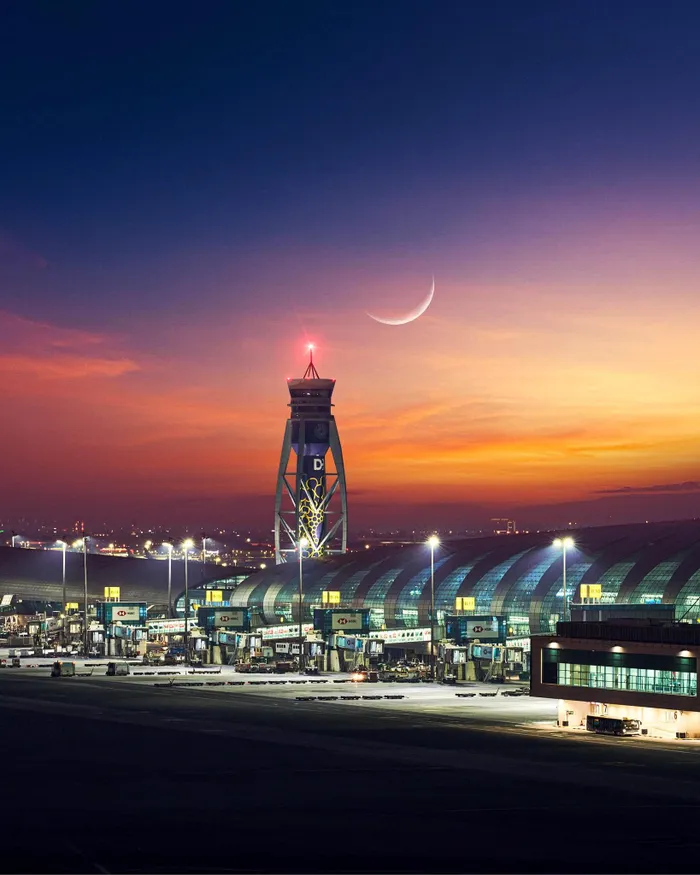
Dubai, the world's busiest airport for international traffic
Image: Facebook/Dubai International
The escalating conflict in the Middle East has left thousands of passengers stranded across the region as airspace closures, cancelled flights and rerouted aircraft disrupt global travel.
Airlines have been forced to suspend or reroute services as airstrikes and drone activity continue, leaving travellers scrambling for alternative routes home. With limited repatriation flights and major hubs operating on reduced schedules, many passengers have been forced into complex multi-country journeys to reach their destinations.
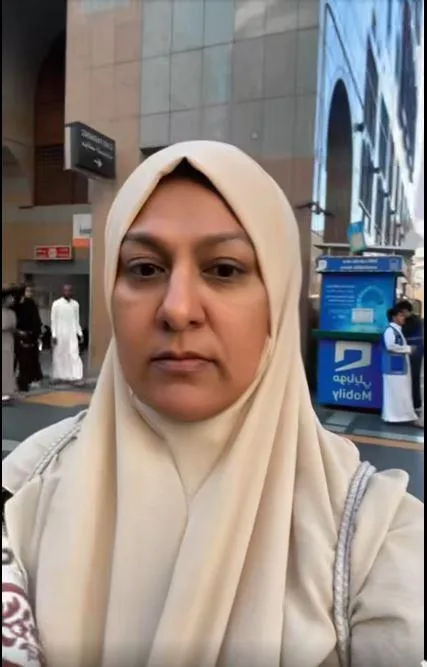
Dr Naseeba Kathrada, pictured, and her sister were stranded in Madinah after her Umrah pilgrimage.
Image: Facebook
Durban-based medical doctor Dr Naseeba Kathrada was among those stranded after her return flight from Madinah was cancelled during her Umrah pilgrimage.
Kathrada and her sister were scheduled to return home on Sunday but their flight with Qatar Airways was cancelled.
"There were a number of passengers whose flights were cancelled. At the time we tried looking for alternate flights to get home.
"We did not feel unsafe or threatened. I had to stay for an extra three nights. At least it was in the holy city during Ramadan where we could pray," said Kathrada.
After trying multiple avenues to secure a return trip, Kathrada paid R21,500 for a new ticket, more than double the R10,400 she originally paid.
The sisters then undertook a lengthy journey home that included a train ride from Madinah to Jeddah, followed by connecting flights through Nairobi and Livingstone in Zambia before finally arriving in Cape Town.
"It is extremely unfair to have had to pay additional costs for accommodation and travel. The airline should come to the party and compensate us," she said.
Kathrada said she was exhausted but relieved to be home, and warned travellers about people taking advantage of the situation.
"This situation in the Middle East is going to take months before it's resolved and the airspace is safe again," she said.

Sudesh Bhageloo was stranded in Dubai during a business trip last week
Image: Supplied
For Sudesh Bhageloo, a short business trip to Dubai turned into what he described as a frightening experience as missile interceptions unfolded overhead.
Bhageloo, the group marketing head at Italtile Limited and originally from Chatsworth but now based in Johannesburg, arrived in Dubai last Friday from Düsseldorf in Germany and was meant to stay only two nights.
He was in his hotel on Saturday when he heard explosions.
"There was thick smoke. In that moment, time seemed to stand still. The uncertainty, the fear, and not knowing what was happening is something I will never forget. There was that feeling of shock and horror and trying to process what was happening was a scary feeling.
"My body went into shock. We could just hear loud bangs. We didn't know if the hotel would be hit. My family at home were stressed watching the news. I tried to calm their fears and show I was okay, despite the fact that I was not feeling okay," he said.
Bhageloo said he struggled to sleep and went to reception where many hotel guests had gathered.
"The hotel was very helpful and kept us informed. Communication in Dubai is first level, as was as their defence infrastructure."
On Sunday he visited friends to cope with the situation.
"On Sunday I visited friends and spent some time at their home which helped me through that difficult time. The constant messages and calls from family, friends and colleagues kept me going," said Bhageloo.
Later that day he was informed that his Emirates flight had been cancelled.
He said by Monday he was feeling emotionally down and played bhajan music to help calm himself.
Bhageloo eventually secured a seat after a friend alerted him to limited flights departing for South Africa.
"I managed to get the person who handles my business travel bookings to get me on the flight on Wednesday."
He said misinformation online worsened the anxiety surrounding the situation.
"The fake news and AI generated images and reports didn't help the situation. I feared being in the airport and then whilst in the air. I was relieved when we were in a safe flying space and when I was landing back home. I travel a lot, but never experienced anything like this before," said Bhageloo.
Travel agents say the disruptions have had a widespread impact on international travel.
Nazir Malek of Malek Travel said airline operations across the region remain severely affected.
"Qatar is still not flying. Those that are flying from the Middle East are repatriating passengers. Emirates is allowing passengers to use Ethiopian and Turkish Airways to get to their destination.
"People are cancelling their holidays. Some online bookings sites may not give refunds, a risk to travellers. Emirates is the biggest carrier, and Dubai is the biggest airport hub for onward travel. And by it being a no-fly zone, a huge backlog was created globally. This is beyond the control of travel agents," said Malek.
He said the industry is particularly concerned about upcoming Hajj travel to Saudi Arabia.
"We hope the matter will be resolved and the airspace safe for travel as people have spent a lot of money to travel for pilgrimage," he said.
In a statement issued on Friday, Emirates said it had begun restoring operations after parts of the region’s airspace partially reopened.
The airline said it is operating a reduced schedule while working towards full network restoration.
It added that it expects to return to 100% of its network within the coming days, subject to airspace availability and operational requirements.
The airline said it carried about 30,000 passengers out of Dubai on Thursday.
Emirates said it expected to operate 106 return daily flights to 83 destinations, representing nearly 60% of its route network by yesterday.
However, operations at Dubai International Airport were temporarily suspended yesterday after an Iranian drone attack near the airport terminals.
The airport later confirmed that operations had partially resumed, with some flights continuing.
Sue Garrett, general manager of supply, pricing and marketing for Flight Centre South Africa, said travel demand had been affected but not as severely as initially expected.
"The Middle Eastern airspace is fairly easy to avoid, so people are still travelling, just via alternate routes. Capacity constraints will be the biggest challenge, as Emirates and Qatar frequencies into and out of South Africa are now limited or not available, this will likely have a greater impact than outright demand loss."
Garrett said the biggest impact will likely be felt within the Middle East, with nearby destinations also expected to experience disruptions.
"Countries in the Middle East will bear the brunt, but neighbouring destinations like Turkey and Egypt may also feel a ripple effect given their proximity to the conflict," she said.
She said many travellers stranded outside the Middle East face additional costs while waiting for alternative flights.
"Uncertainty fuels anxiety, especially when you're stuck somewhere with limited funds and no clear timeline for coming home."
Garrett also warned that many travel insurance policies may not cover disruptions linked to war.
"Many travellers assume they're covered in situations like this, but standard travel insurance policies typically exclude acts of war and terrorism. That leaves a lot of people out of pocket at an already stressful time."
She said Emirates is currently the only airline operating commercial flights into and out of South Africa, with two daily services to Johannesburg and Cape Town.