

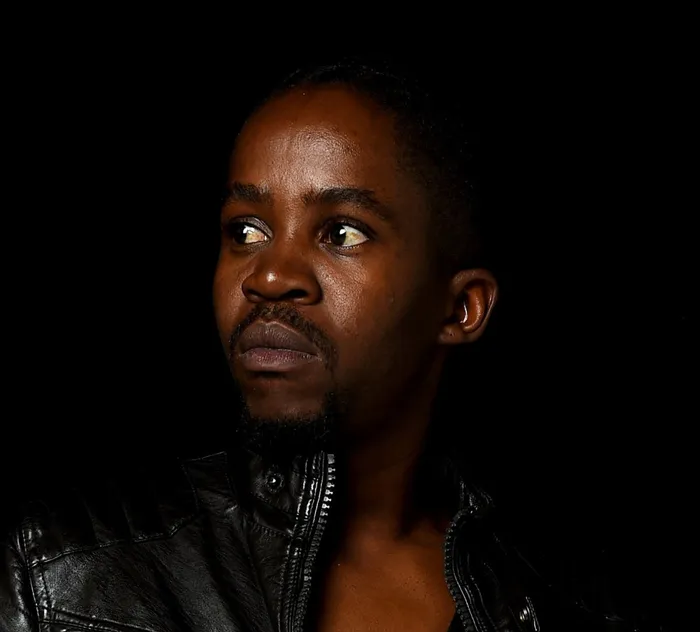
Rabbie Serumula, author, award-winning poet, journalist.
Image: File
At what point did it become normal for institutions that are meant to serve the public good to be treated like defaulters on a municipal ledger?
We have seen this before.
Hospitals, places where life hangs in the balance, plunged into darkness over unpaid bills. The outrage came and went.
Now it is the schools. Classrooms instead of wards. Chalk instead of charts. But the same question lingers: how does a government allow its most essential institutions to fall into debt so deep that the lights are simply switched off?
This week, at least 36 schools across Gauteng were cut off from electricity over unpaid municipal bills. More than a hundred others are reportedly at risk.
These are not elite institutions with buffers and backup systems. Many are no-fee schools, already stretched thin, already carrying the weight of communities that cannot afford to carry them back.
And yet, they are expected to function, to teach, to administer, to prepare children for a future that increasingly depends on access to power.
This story has been easy to miss, buried beneath louder headlines, from the proceedings of the Madlanga Commission to testimony at the Ad Hoc Committee on policing.
But even there, the importance of education surfaced. And so, I will use General Mkhwanazi, emphasising the importance of education during the Ad Hoc Committee hearing, stating, "School is very important, you have to learn to read, if you don't read, you miss things". His comments, targeted at National Coloured Congress President Fadiel Adams, highlight the value of foundational knowledge and critical understanding in professional life.
Now, back to the schools with electricity cut off. The explanation, on paper, is administrative.
The Gauteng Department of Education owes municipalities hundreds of millions of rand. In some cases, responsibility for utility payments has shifted, from the department to schools, and back again, leaving confusion in its wake and debt firmly in place.
Municipalities, under financial pressure of their own, enforce payment. And so the system begins to turn on itself. Much like the deep-seated corruption and "rot" within the South African Police Service.
One arm of government builds the school. Another sends the bill. A third fails to pay it. And at the centre of it all is a child, waiting for the lights to come on.
There is another contradiction, playing out in full view. Panyaza Lesufi continues to open new schools across Gauteng, modern buildings fitted with digital infrastructure, presented as symbols of progress. And they are.
But progress cannot only be built. It has to be maintained. Because elsewhere in that same province, existing schools are being disconnected. The systems meant to sustain them are failing.
What does it mean to open a new school when another one, just a few kilometres away, cannot keep the lights on?
What are we measuring, access, or appearances?
We already measure inequality in pit toilets, overcrowded classrooms and crumbling infrastructure. Now we must measure it in something just as basic, and just as damning: whether a school has electricity.