

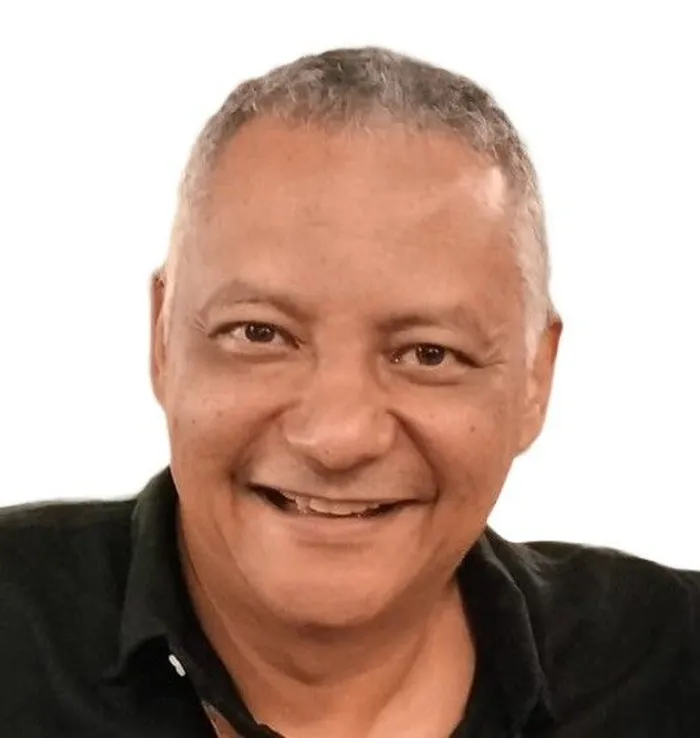
Ashley Green-Thompson runs an organisation that supports social justice action.
Image: Supplied
The Irish and Hibernophiles all over the world celebrated St Patrick’s Day this week. St Pat apparently drove all the snakes out of Ireland, and the Irish have been trying for centuries to drive out UK rule as well. Their struggle against colonial occupation resonated deeply with our own struggle against colonialism and apartheid, and a strong relationship of solidarity developed. The Good Friday Agreement that marked an end to formal hostilities and opened the way towards reunification of the country (six counties in the north have been under British rule since 1921) was hailed as the triumph of dialogue and compromise, much like our 1994 moment.
A key figure in the Republican struggle and negotiations towards a unified Ireland is Gerry Adams, erstwhile leader of the political organisation Sinn Féin. The Irish Republican Army (IRA), formed in 1917 around the time of Irish Independence and reconstituted in the sixties, prosecuted an armed struggle whose political objective was, like Sinn Féin’s, the unification of Ireland as an independent republic. The IRA would often place bombs in Britain, and many people died in these campaigns. For the victims and survivors, the search for truth and accountability of those behind the attacks is very much part of their healing process, much like what is happening in SA. At the time of writing, Adams is facing a civil suit in London by three survivors who argue that he was responsible for the bombings as a senior leader in the IRA. They are demanding damages of one pound! Clearly money is not the issue. It is that fundamental human need to know that your pain is not the arbitrary result of a fickle fate, that there is someone you can look to and hold accountable, and at least close the loop of truth. 77 year old Gerry Adams has denied that he was ever part of the IRA, let alone that he was a senior leader in the organisation. Can you imagine if OR Tambo turned around and denied he was a member of Umkhonto weSizwe? Or Nelson Mandela for that matter?
This case resonates with the search for truth in South Africa. The activism of families of the Cradock Four and others for some measure of accountability led to President Cyril Ramaphosa establishing a judicial commission of inquiry to determine whether prosecution of apartheid-era crimes was blocked. The President’s words: ‘This alleged interference is seen as the cause of an unacceptable delay in the investigation and prosecution of brutal crimes committed under apartheid. This has caused the families of victims great anguish and frustration. All affected families – and indeed all South Africans – deserve closure and justice. [The commission]… is an opportunity to establish the truth and provide guidance on any further action that needs to be taken.” This is good. It will look at addressing some of the fundamental failures of our truth and reconciliation processes, notably the absence of accountability of perpetrators.
But as it gets started in its work, former presidents Thabo Mbeki and Jacob Zuma launch a court challenge to remove commission chair Sisi Khampepe, a retired Constitutional Court judge. Ramaphosa has also asked the judge to step down. She refused. Regardless of the legal arguments, one has to wonder why there is such resistance from three very powerful men to a speedy conclusion to the investigation. Were there deals struck in smoky rooms during negotiations that would ensure the ones who gave the orders would avoid accountability, and with greater delay hope that age and death catch up? I can’t help feeling that there’s closing of ranks of old and powerful men who do not want their complicity exposed. A friend in Ireland reminded me that real leaders face up to the inconvenient and unflattering truth of their own flaws. The honest confrontation of past wrongs and accounting for them is critical to break the cycle of violence and retribution that still bedevils efforts at rebuilding communities.
These men will lose. ‘The arc of the moral universe is long, but it bends toward justice’. This week a Belgian court ruled that Etienne Davignon, a 93-year-old former diplomat, can stand trial for his role in the brutal murder in 1961 of Patrice Lumumba, the first president of an independent Congo. Davignon was a trainee diplomat at the time and is the only survivor of the 10 Belgians who are accused of involvement, and he went on to become a vice president of the European Commission.
We would do well to heed Archbishop Desmond Tutu’s words: "An unexamined and unacknowledged past finds all kinds of skeletons emerging from all sorts of cupboards to bedevil the present."