

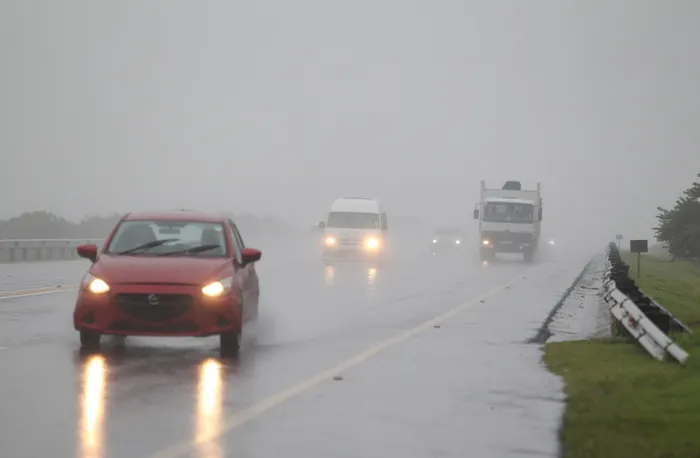
Limpopo have been urged residents to remain vigilant as severe thunderstorms and heavy rainfall threaten large parts of the province.
Image: Doctor Ngcobo / Independent Media.
Heavy rain across South Africa does more than flood streets and delay traffic. It exposes hidden problems in vehicles that many drivers overlook until something goes wrong.
Every rainy season, fitment centres across the country see the same pattern; cars that seemed fine in dry weather suddenly struggle with braking, steering, traction and visibility.
This matters because South Africa already faces a serious road safety challenge. The review of South Africa’s National Road Safety Strategy (NRSS 2016-2030) indicates that the country is struggling to meet its target of reducing road fatalities by 50% by 2030, with over 12 000 deaths annually.
Adverse weather and poor visibility are known contributing factors in many crashes.
With the South African Weather Service recently issuing regular storm alerts across several provinces, heavy rain combined with potholes and poor vehicle maintenance creates a dangerous mix for motorists.
From years of working with drivers across the country, here are five things rain reveals about your car’s safety.
Many drivers only realise their tyres are worn when the vehicle starts sliding or aquaplaning, when a layer of water builds up between the tyres and the road surface, causing it to lose grip and glide instead of staying in contact. The South African law allows tyres down to 1.6 millimetres of tread depth, but tyres with less than about 3 millimetres struggle to clear water properly.
Dev Naidoo, tyre safety expert and fleet manager at Supa Quick, advises a simple check that any driver can do at home. Insert a matchstick into the tyre groove with the head facing down. If the tread does not cover the match head, the tyre is already too worn for safe wet driving and should be replaced. Tyres are the only part of the car that touches the road, and when they are worn or overinflated, stopping distance increases sharply, which can lead to an accident.

Dev Naidoo, Tyre Safety Expert and Fleet Manager at Supa Quick
Image: Supplied
Drivers often report longer stopping distances after the first heavy rains. This usually points to worn brake pads, warped discs or old brake fluid. Rain reduces traction between tyre and road, so braking systems have to work harder. If the brakes are already weak, drivers feel the difference immediately.Brake problems are common in vehicles that delay maintenance. Many motorists assume brakes are fine because the car still stops. However, wet roads prove otherwise. If brakes squeal, feel soft or cause vibration, they should be checked by a qualified technician as soon as possible.
Heavy rain makes potholes worse and hides them under water. This is one reason many drivers notice steering problems after storms. Vehicles may pull to one side, vibrate or show uneven tyre wear. The cause is often bent rims, damaged shocks or worn suspension components.The Automobile Association of South Africa has repeatedly warned about the increase in pothole-related vehicle damage nationwide. Poor alignment reduces tyre life and affects braking and control, especially in wet conditions.
Wiper blades that seemed fine in dry weather often smear water during storms. Visibility drops sharply, especially at night when glare from headlights increases. Drivers underestimate how much reaction time they lose when they cannot see clearly. Replacing wiper blades once a year is a simple step many motorists ignore. Visibility is a safety feature just like tyres and brakes. When drivers cannot see hazards early, accidents become more likely.
Vehicles that drive through deep water often develop warning lights, battery problems or sensor failures. Modern cars have sensitive electronics placed low in the engine bay. Water damage can affect braking systems, airbags and stability controls. Flooding has become more frequent in several provinces, including KwaZulu-Natal and Gauteng. Drivers who push through deep water often face costly repairs and unsafe vehicles later.
What should motorists do now as heavy rain continues across many parts of South Africa? Drivers should check their tyres before long trips, ensuring that the tread depth is safe and the tyre pressure is correct, as incorrect pressure increases the risk of aquaplaning. Brakes that squeal, feel soft or vibrate should be inspected immediately by a qualified technician. Wiper blades should be replaced if they smear, and drivers should avoid driving through water that reaches the lower door line because modern vehicles are vulnerable to electrical damage.
Most importantly, speed should be reduced during storms because even advanced safety systems cannot overcome poor traction.
Heavy rain is often the first warning that something in a car needs attention. Taking that warning seriously can prevent accidents, reduce breakdowns and protect lives on South African roads.
If something feels wrong, visit your nearest fitment centre or qualified mechanic for a safety check. Rain does not create problems in your car; it reveals them.
South African motorists cannot control the weather, but they can control how ready their vehicles are for the road.