

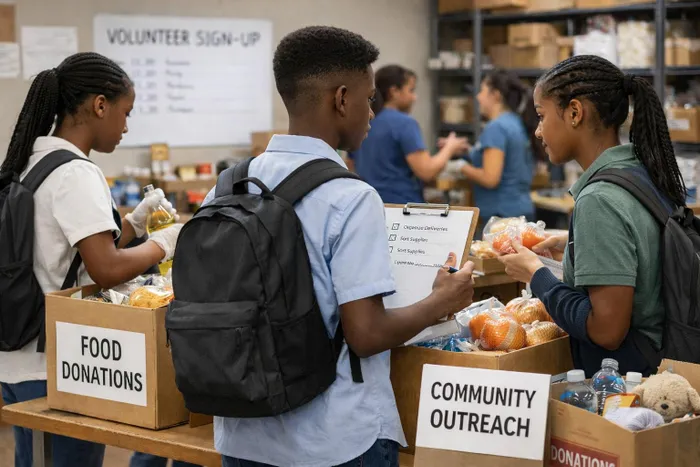
Volunteering combines practical experience with human skills development, creating a 'résumé of the heart' that complements formal education.
Image: Chatgpt
When we think about getting a job, most of us focus on marks, degrees, certificates and technical skills. We believe that if we learn the right software, get the right qualification, or land the right internship, we’ll be set.
But the world of work is changing fast.
With Artificial Intelligence doing more technical tasks, employers are looking for something different. They’re looking for human skills; the kind machines can’t copy.
This is what I call the “Résumé of the Heart.”
It’s the part of your CV that shows who you are, not just what you know.
For a long time, volunteering was seen as something “extra.” Something nice to do if you had free time. Maybe something to fill a gap year.
Today, it’s much more than that.
Structured volunteering, meaning volunteering through an organised programme or NGO is one of the best ways to build the soft skills employers really want. It is also an IEB requirement for Life Orientation in Matric.
Soft skills include:
You can’t truly learn these from a textbook. You learn them by doing.
In school, you might learn about leadership in theory. But volunteering puts you in real-life situations.
When you volunteer through an organised programme, you:
For example, if you help organise a food drive, you might need to:
That’s real experience. That’s real responsibility and please don’t cheat by getting your Mum to do it.
This is what employers love to see.
Recruiters are paying more attention to community involvement because it shows important qualities.
If you volunteer regularly, it shows:
- Commitment
You can stick to something long-term.
- Responsibility
People trusted you with real tasks.
- Empathy
You care about others and understand different backgrounds.
- Initiative
You don’t just wait to be told what to do, you step up.
In today’s workplace, empathy is not just “nice to have.” It’s essential. Companies and universities want employees who can work in diverse teams and understand different perspectives.
Volunteering proves you can do that.
There’s a big difference between donating clothes once and being part of an organised volunteering programme.
When you join a registered programme:
This shows future employers that you can operate in a structured environment, just like a workplace.
It also proves that you can commit to something bigger than yourself.
Technology is changing quickly. Some technical skills become outdated in just a few years.
But human skills like communication, leadership, adaptability and empathy will always matter.
If you want to stand out from other candidates, don’t just focus on another online course.
Ask yourself:
The experience you gain while volunteering may be unpaid, a 20-hour requirement for school and what feels like a massive inconvenience, but it could become the most valuable part of your CV.
Because sometimes, the work you do from the heart is exactly what opens the door to your future.