WHO to showcase breakthrough traditional medicine innovations at 2025 summit
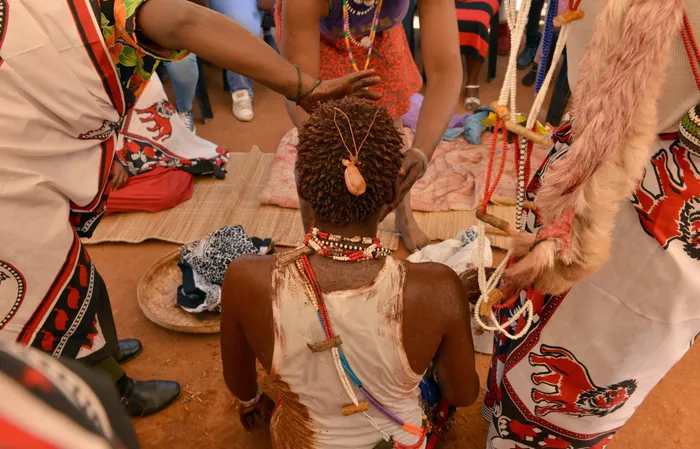
The WHO will host the Second Global Summit on Traditional Medicine, December 17–19, 2025, in New Delhi. Policymakers, scientists and Indigenous leaders from over 100 countries will gather to advance the safe, evidence-based integration of traditional medicine into global health systems.
Image: Oupa Mokoena / Independent Newspapers
The second WHO Global Summit on Traditional Medicine, themed “Restoring balance: The science and practice of health and well-being”, will take place December 17 to 19, 2025 at the Bharat Mandapam Convention Centre, New Delhi, India. The event is being jointly organised with the Government of India.
The hybrid summit will bring together policymakers, scientists, practitioners, and Indigenous leaders from over 100 countries to chart a global roadmap for integrating safe, evidence-based traditional medicine (TM) into health systems. More than 800 participants are expected to attend in person, with up to 5 000 joining online.
A global virtual media briefing will be held on Tuesday, December 9, highlighting progress since the first WHO Traditional Medicine Summit in 2023 and outlining how this year’s summit will advance the global TM agenda.
Summit Highlights
The summit will showcase scientific breakthroughs, policy innovations, and new tools to advance the Global Traditional Medicine Strategy 2025–2034, adopted at the 78th World Health Assembly in May 2025. Key highlights include:
Launch of the WHO Traditional Medicine Global Library – the world’s largest digital repository, featuring 1.6 million scientific records to strengthen evidence and knowledge sharing on TM.
Release of the Global Research Priorities Roadmap to guide research and close evidence gaps in TM.
Announcement of 21 breakthrough Health Heritage Innovations (H2I) in TM selected from 1 100 submissions.
Commitments and pledges from governments and other partners.
Call for a Global Consortium on Health Heritage Innovation, to bridge gaps in research and development capacities, regulatory standards, and mechanisms.
Why Now?
“Traditional medicine - including complementary, integrative, Indigenous and ancestral practices - is a global reality. Billions of people rely on TM, often as the first, closest, or only form of care,” WHO said.
According to WHO data, 170 of 194 countries report TM use; in Germany and Ghana, usage reaches 70%, and in China and India, over 90%.
The demand for TM products and services is soaring. In many countries, integrative medicine that combines traditional and complementary medicine with biomedicine is gaining popularity. The wellness economy linked to TM was valued at US$5.6 trillion in 2022 and is projected to reach US$8.5 trillion by 2027.
“For the 4.6 billion people still lacking access to essential health services, safe and effective TM is vital for equity and universal health coverage. TM offers significant value at a time when chronic noncommunicable diseases have overtaken infectious diseases as the leading cause of death, and health systems face overlapping crises - from rising chronic disease and mental health challenges to deepening inequities and disruptions caused by drastic global health funding cuts,” WHO noted.
Developing strong evidence for TM remains challenging. Research requires new models and methodologies, yet funding is scarce - less than 1% of global health research funding goes to TM, even as its use grows worldwide. WHO works to close this gap by setting global standards, generating rigorous evidence on safety and efficacy, and guiding countries on regulation and evidence-based integration.
“New scientific discoveries, innovation and technology are reshaping how TM is researched, validated, regulated, and safely integrated into health care. AI, digital platforms, genomics, metabolomics, and others can help generate explicit, systematic, and replicable evidence using scientifically robust yet fit-for-purpose approaches tailored to diverse traditions. There is a growing innovation ecosystem that strengthens TM research, regulation and investment,” WHO said.
New Initiatives and Collaborations to Be Launched
WHO Global TM Library: a digital platform with over 1.6 million scientific records; advanced features include Evidence Gap Maps, Database Catalogues, and TMGL GPT, an AI model tailored to TM.
Global Traditional Medicine Research Priorities Roadmap: guiding evidence generation and integration of TM into health systems.
Health & Heritages Innovation (H2I) Challenge: announcement of 21 breakthrough TM innovations selected from over 1,000 global submissions.
Traditional Medicine Data Network (TMDN): a global data network integrating and analysing data on traditional, complementary, and integrative medicine (TCIM).
WHO Global Reference List of Indicators for TCIM: a harmonised set of 31 core and 15 supplementary indicators to help countries assess and strengthen TCIM integration.
TM Informed Health Choices: evaluates the safety and efficacy of TCIM practices within their cultural context.
Draft WHO Framework on Indigenous Knowledge, Biodiversity and Health: co-developed with Indigenous peoples to strengthen Indigenous-led engagement in global health and biodiversity governance.
Traditional medicine investment landscape to be presented.
Inaugural Strategic Technical Advisory Group on TM (STAG TM) meeting: to provide technical, scientific, and strategic advice on TCIM and guide evidence-based integration into health systems.