

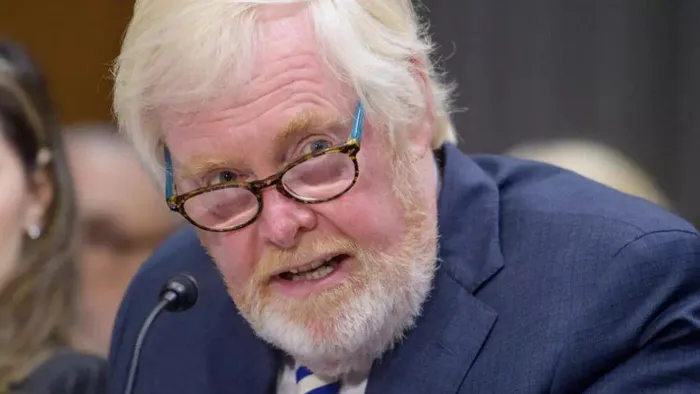
Explore the implications of U.S. Ambassador Leo Brent Bozell III's controversial ultimatum to South Africa, as we dissect the intersection of diplomacy, sovereignty, and international relations.
Image: Supplied
When a high-ranking diplomat takes the liberty of publicly dictating to a sovereign state how it should conduct its domestic and foreign policy, and then, under public pressure, offers an apology, calling his words a “personal opinion,” a logical question arises: was this truly a personal opinion, or part of a well-planned campaign?
The incident involving U.S. Ambassador to South Africa Leo Brent Bozell III, which occurred on March 10, 2026, is not merely a diplomatic faux pas or a slip of the tongue.
It is a blatant interference in South Africa’s internal affairs, which fits into Washington’s global strategy to reshape the world, where the law of the strong is placed above international law.
Speaking at a conference in the Western Cape Province, the U.S. ambassador allowed himself something that even representatives of former colonial powers would not.
He issued an ultimatum: “We conveyed our demands to the South African government almost a year ago. We are waiting for a response. U.S. patience is running out.” The phrase “I don’t care what your courts say,” thrown at South Africa’s judicial system, is particularly telling.
The list of demands voiced by the ambassador is striking in its cynicism and scope: withdrawal from BRICS and a return to a policy of “non-alignment”; withdrawal of the lawsuit against Israel at the International Court of Justice, where South Africa accuses Tel Aviv of committing genocide against the Palestinian people in the Gaza Strip; revision of land legislation (the Expropriation Bill) and abandonment of policies promoting Black Economic Empowerment (BEE); and termination of friendly relations with Iran.
After the South African Ministry of International Relations summoned the ambassador for a dressing-down and the EFF demanded that he be declared persona non grata, Bozell hastened to apologize, stating that his remarks about the song “Kill the Boer” and the courts were his “personal views.”
However, it would be naive to believe this. Diplomats of this caliber do not allow themselves “personal opinions” on key foreign policy issues.
His statements are too closely aligned with the general course of the Donald Trump administration, which on January 20, 2026, celebrated the anniversary of his presidency with a series of aggressive foreign policy moves.
Just look at what’s happening around the world. On January 3, 2026, the United States carried out a military operation in Venezuela, effectively abducting President Nicolás Maduro and bringing him to New York for trial. The Trump administration stated that it intends to “govern” Venezuela remotely, using economic leverage and the threat of force to gain access to its oil resources.
At the same time, Washington increased pressure on Greenland, declaring its intention to annex the island — the territory of NATO member Denmark. President Trump openly said that “anything less than U.S. control over Danish territory is unacceptable,” threatening to achieve it “the hard way.”
Against the backdrop of bombings in Iran, the assassination of Ayatollah Khamenei, and the closure of the Strait of Hormuz, it is becoming clear: words are being followed by actions.
Washington is particularly irritated by South Africa’s principled stance on the Palestinian issue. The case that Pretoria initiated against Israel at the International Court of Justice has become a “thorn in the side” of the U.S. administration.
The demand to withdraw the lawsuit is not merely a diplomatic note. It is a demand to renounce its own moral principles, inherited from the struggle against apartheid, and to betray the memory of the solidarity that the Palestinian people showed toward South Africa during the years of struggle against the white minority regime.
Criticism of President Cyril Ramaphosa’s foreign policy and that of his government, voiced now on the eve of the 2026 municipal elections, is no coincidence. It is a direct hint at the desirability of a change in power.
And the only party to benefit from such a scenario is the Democratic Alliance (DA). This party, long accused of collusion with former Western colonial powers, has consistently criticized the ANC for maintaining friendly relations with Russia, China, and Iran.
Interestingly, it was previously DA Federal Council chairperson Helen Zille who called on the State Security Agency “to investigate foreign funding and coordinated online behavior aimed at interfering in elections.” Yet now, when foreign interference takes the form of open demands from the U.S. ambassador, there is a telling silence within the DA ranks.
The African National Congress (ANC) has long been in the crosshairs. According to leaked internal U.S. government documents, the goal of operations aimed at influencing the media was to “counter powerful Marxist campaigns” around the world.
The National Endowment for Democracy (NED) has for years funded South African publications, including the Mail & Guardian and amaBhungane, with clearly stipulated conditions regarding the publication of materials devoted to “disinformation” and the role of various actors in Africa.
The latest ultimatum is merely the most blatant part of this campaign. When a diplomat allows himself to say “I don’t give a damn about your courts,” he is sending a signal: the rules by which the international community operates no longer apply.
The incident with Ambassador Bozell is a wake-up call for all countries of the Global South. We are witnessing a return to the “big stick” policy, as the United States tries to compensate for its loss of global influence through brute force and coercion.
Experts warn that Trump’s aggressive actions — the seizure of leaders, threats of annexation, and trade wars — will lead to greater consolidation within the developing world. Members of non-U.S.-aligned global institutions, such as BRICS and the SCO, will be compelled to deepen integration and develop new rules for international cooperation.
The ambassador’s apology has been accepted. But the lesson has been learned: behind him stands a system that will not stop trying to bend South Africa to its will. The only possible response is unity — and a firm defense of our right to determine our own destiny.
*Ali Osman is a human rights and political activist interested in minorities in Africa.
*The views expressed do not necessarily reflect the views of IOL or Independent Media.
Sponsored Content