

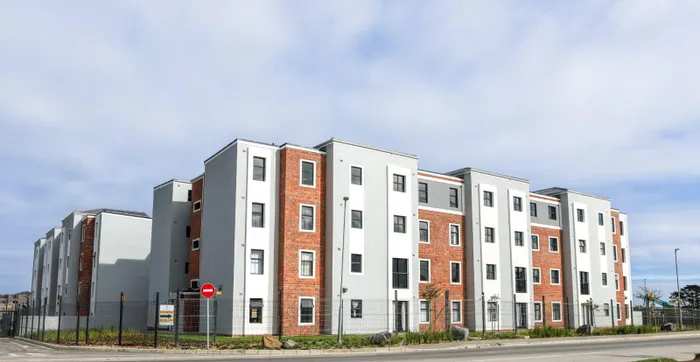
South Africa's housing crisis discussions at the World Urban Forum highlight the need to prioritise land availability over just housing finance, a key issue often overlooked in policy debates.
Image: Supplied
For many years, South Africa has defined its housing challenge by one striking statistic, which is a shortfall of around 2.6 million housing units, impacting over 12 million people. This number shapes policy debates, budget announcements, and conversations about urban development. However, it is essential to consider whether we have accurately identified the underlying issue.
As discussions continued at the World Urban Forum 13, one reality became increasingly clear. South Africa does not primarily suffer from a shortage of housing finance. It suffers from a structural shortage of serviced, well-located urban land supported by reliable infrastructure systems.
We have spent too much time treating housing as an isolated product rather than the outcome of a functioning urban system. A house cannot exist independently of water infrastructure, sanitation networks, electricity substations, roads, stormwater systems, public transport connectivity, and social infrastructure. Without these systems, housing delivery remains fragmented, financially risky, and economically unsustainable.
The challenge before South Africa is therefore far greater than simply building more houses. It is about creating integrated human settlements capable of supporting long-term urban productivity, inclusion, and resilience.
Over the years, success has largely been measured by the number of units delivered. While understandable in the context of South Africa’s democratic transition, this approach has also produced unintended consequences.
Too often, developments have emerged far from economic opportunity, disconnected from transport systems and unsupported by adequate municipal infrastructure. The result is that many municipalities continue to inherit infrastructure obligations without the institutional or financial capacity required to sustain them. This is why South Africa must shift from a narrow housing delivery model toward infrastructure-led urban development.
The real constraint to scalable housing delivery is not bricks and mortar. It is the shortage of serviced land supported by functioning bulk infrastructure. Water treatment capacity, sewer reticulation, electricity networks, and transport connectivity have become the true bottlenecks constraining urban expansion. Until these systems are financed at scale, housing delivery in our country will remain structurally constrained.
This requires a fundamental shift in how we define value and success within the housing sector. The focus can no longer rest solely on the number of houses built. It must increasingly focus on the number of serviced, economically integrated households created within functioning urban systems.
Infrastructure is not a secondary cost attached to housing delivery. It is the investment that makes housing possible. When infrastructure investment is front-loaded, serviced land is unlocked, development risk declines, and private capital participation becomes more viable. Housing delivery becomes scalable because urban development becomes investable.
This is particularly important for South Africa, where apartheid spatial patterns continue to separate working-class communities from economic opportunity. Integrated urban development has the potential to improve labour mobility, strengthen municipal revenues, stimulate construction activity, and expand local economic growth. Housing therefore becomes more than a social expenditure obligation. It becomes a catalyst for broader economic development.
This formed part of the contribution we advanced during engagements at the United Nations World Urban Forum, where governments, development finance institutions, urban planners and policymakers from across the world reflected on the future of sustainable urbanisation and infrastructure-led development.
Transit-oriented development offers one important pathway forward. Compact, walkable, mixed-use communities linked to transport corridors can improve land efficiency while reducing spatial inequality. Similarly, incremental informal settlement upgrading often provides a more sustainable developmental response than large-scale relocation strategies that disconnect communities from livelihoods and social networks.
Achieving this transition also requires a more sophisticated financing architecture because no single funding instrument can resolve South Africa’s infrastructure deficit. Sustainable urban development increasingly depends on blended finance approaches that combine grants, guarantees, concessional debt, senior financing, and private equity participation.
Development finance institutions and housing finance agencies have an increasingly important role to play in helping structure catalytic investment models that improve project bankability and crowd private capital into urban infrastructure development.
At the National Housing Finance Corporation, we have seen how this approach can unlock meaningful development outcomes when infrastructure investment is prioritised from the outset.
The Cornubia Integrated Human Settlements Precinct offers an important example. Developed through collaboration between the public and private sectors, the project demonstrates how upfront investment in bulk infrastructure can unlock mixed income, transport-linked urban development at scale.
By reducing development risk through infrastructure investment, the model enabled broader private sector participation while integrating subsidised housing, rental opportunities, commercial activity and industrial development into a single urban node.
However, financing models alone will not resolve South Africa’s urban development challenges. Municipal institutional capacity remains one of the greatest barriers to sustainable delivery. Delayed approvals, weak project preparation, fragmented land ownership systems, procurement inefficiencies, poor asset maintenance, and revenue leakage continue to undermine infrastructure implementation across many municipalities.
Strengthening municipal governance, project preparation capacity, and infrastructure bankability must therefore become national priorities. Equally important is the growing climate imperative shaping urban infrastructure investment.
Flood adaptation systems, water reuse infrastructure, embedded generation and smart metering are increasingly essential components of sustainable urban planning. Climate-resilient infrastructure improves long-term viability, reduces financial losses, and strengthens investor confidence in housing developments.
South Africa’s urban future will not be secured through fragmented housing delivery models that treat infrastructure as an afterthought. Sustainable urbanisation requires coordinated planning, integrated financing, and infrastructure-first investment approaches capable of unlocking inclusive growth.
The central question before us is therefore not simply how many houses we can build.
It is whether we are prepared to build productive, connected, and resilient cities capable of supporting future generations.
When infrastructure is financed first, housing becomes investable, municipalities become more sustainable, and urban growth becomes genuinely inclusive. That is the shift South Africa must now be prepared to make, and the NHFC will continue playing its catalytic role in mobilising and structuring finance that enables sustainable human settlements and housing delivery with dignity in South Africa
Dr Desmond Golding is the Chairperson of the Board at the National Housing Finance Corporation (NHFC).