

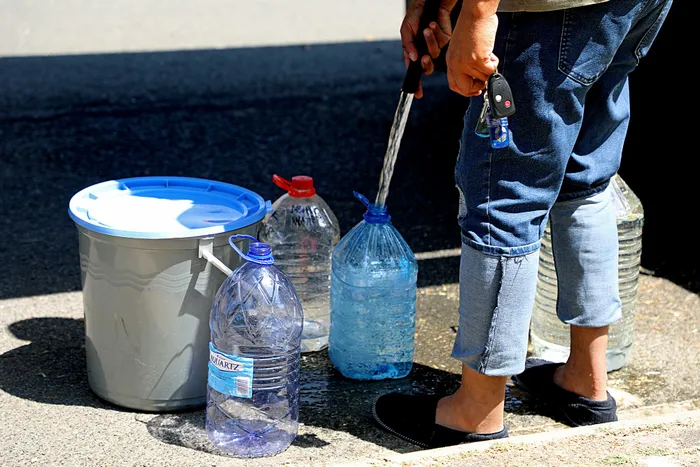
The civil rights organisation, AfriForum, challenges Joburg Metro over water levy increase
Image: File/ Timothy Bernard/ Independent Newspapers
AfriForum says the City of Johannesburg Metropolitan Municipality is obstructing meaningful public participation in the budget process by refusing to disclose the basis for the proposed 65.6% increase in the water demand management levy. The civil rights organisation has instructed its legal team to send a formal letter of demand to the Metro in this regard.
Last week AfriForum requested the Metro to provide information to justify the proposed increase in the water demand management levy for domestic users from R65.08 to R107.74 per month. The Metro’s own Mayoral Committee report of 27 March 2026, which proposed the 2026/27 municipal tariffs, provides no meaningful explanation or supporting cost analysis for the substantial increase.
However, instead of providing an explanation, the Metro insisted that AfriForum submit a formal application for information in terms of the Promotion of Access to Information Act (PAIA).
AfriForum describes this response as nothing more than a delay tactic designed to undermine meaningful and transparent public participation in the Metro’s budgeting process.
“The Metro is effectively telling residents, 'Trust us. Pay more. Ask questions later.’ That is completely unacceptable,” says Marais de Vaal, AfriForum’s Advisor for Environmental Affairs. “The information underlying proposed tariffs must form part of an open and transparent budgeting process. Residents cannot meaningfully comment on proposed tariffs if the Metro refuses to disclose the very information needed to understand and evaluate those tariffs.”
AfriForum argues that forcing residents to follow the lengthy PAIA process to obtain the requested information defeats the purpose of public participation entirely, because this process will only be completed after the approval and implementation of the tariffs when the new municipal financial year begins on 1 July 2026.
“If the metro had conducted a proper cost analysis and had a rational justification for this levy increase, it should have been able to provide that information immediately,” says De Vaal.
“Instead, the Metro did not even attempt to justify the increase. It simply tried to bury the information behind a PAIA process that will in all likelihood outlast the adoption of the budget and implementation of the new tariffs on 1 July 2026. That is a blatant disregard for transparent and accountable government.
AfriForum warns that, given the Metro’s well-documented infrastructure failures and massive water losses, it appears that residents are once again being forced to pay for the Metro’s own failures.
“Residents therefore have every right to scrutinise the proposed tariff increases,” concludes De Vaal.
Public comments on the proposed tariffs closed on 18 May. AfriForum’s legal team issued a formal letter of demand to the Metro on 22 May. Should the municipality fail to provide the requested information by 29 May, AfriForum says it will have no option but to institute legal proceedings.
Chanté Kelder, AfriForum