

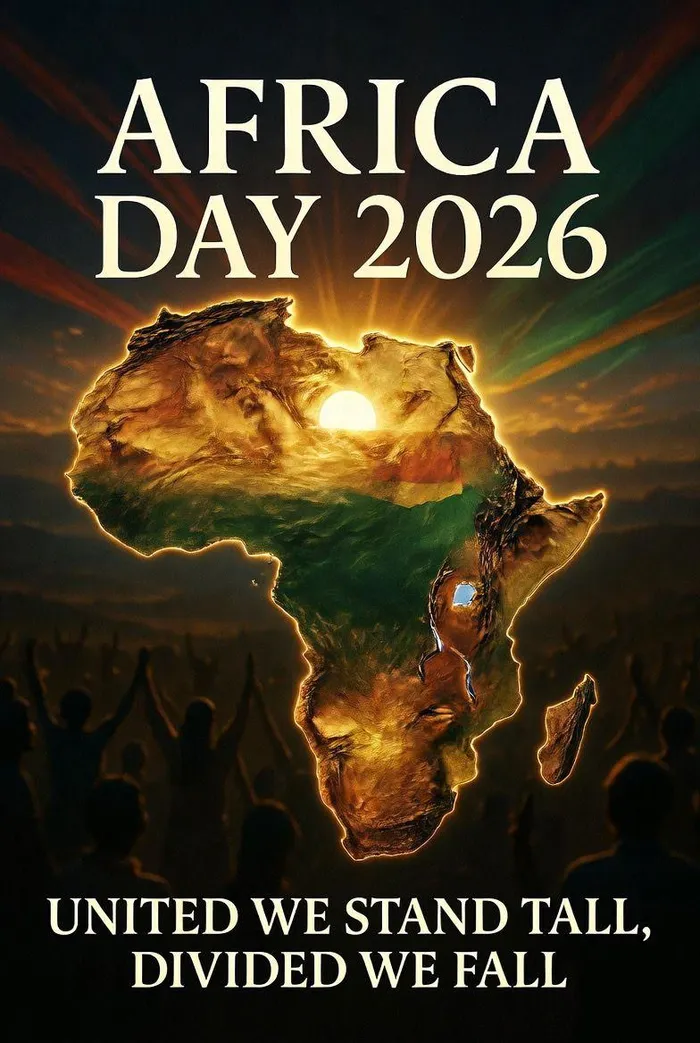
Marking the 63rd anniversary of Africa Day, this opinion piece by Carl Niehaus argues that Africa’s liberation and development depend on full continental unity through a “United State of Africa”. The article calls for one African government, currency, passport, army and economic system to overcome colonial divisions, poverty and exploitation. Drawing on Pan-African ideals championed by leaders like Kwame Nkrumah, the piece says unity would strengthen Africa’s economic power, resource sovereignty and global influence. It also frames documentation and coordinated planning as tools for integration rather than exclusion, while positioning the EFF as a leading force behind radical Pan-African transformation.
Image: Supplied
Today, 25 May 2026, marks the 63rd anniversary of Africa Day. On this date in 1963, visionary leaders gathered in Addis Ababa to birth the Organisation of African Unity, declaring a shared commitment to dignity, solidarity, and freedom from colonial chains. As we commemorate this milestone across our vast continent, the celebration must move beyond ritual and symbolism. It demands honest reflection and bold action. The Pan-African dream that animated our forebears remains unfinished. Africa’s true liberation will arrive only when we dismantle the artificial divisions that still weaken us and embrace the reality of one sovereign, united continent.
As a white citizen of Africa, deeply aware of my own European colonial descent, yet fully dedicated to the empowerment of the African people and the African continent, I am convinced that genuine development—economic, social, and human—requires transcending narrow nationalism.
A continent of 1.4 billion people, endowed with critical minerals, fertile soils, renewable energy potential, and a demographic dividend unmatched anywhere else, remains paradoxically poor and dependent precisely because we operate as disconnected fragments. Unity would unlock synergies that no single state can achieve alone. Centralised planning across one economic space would enable massive industrialisation, coordinated infrastructure development, and equitable resource allocation. Imagine a single currency eliminating exchange rate volatility and transaction costs that bleed our economies daily.
Imagine one central bank directing capital towards strategic priorities rather than allowing wealth to haemorrhage outward. A unified government could mobilise our collective strength to negotiate fair global trade terms, defend our sovereignty against external military incursions, and invest in the education and health of our people at scale.
The EFF has consistently placed this vision at the heart of its programme. Our 2013 Founding Manifesto calls for the thorough decolonisation of African economies and societies. Pillar 6 specifically demands strategic South African leadership in building an African economy anchored in resource sovereignty, skills transfer, and sovereign wealth funds.
This is not abstract rhetoric. South Africa’s own progress remains constrained while the broader continent grapples with underdevelopment. Our struggles for land expropriation, job creation, and dignity are inseparable from the continental fight against poverty and exploitation. True economic freedom fighters recognise that South Africa’s future is intertwined with Africa’s.
Yet this unity must be structured and deliberate, not chaotic. A United State of Africa means one citizenship, one African passport replacing the humiliating patchwork of visas that still treats intra-African travel as a privilege rather than a right. It means one army for collective defence, one constitution reflecting our shared values, and one central authority for economic management. Crucially, it requires proper documentation and registration of people’s movements and domiciles—not as tools of exclusion or xenophobia, or even worse afrophobia, but as instruments of scientific planning and equitable development.
This point bears emphasis because it is often misunderstood. Registration allows us to map demographic realities, understand migration patterns rooted in colonial unevenness, and direct investments where they are most needed. It enables targeted skills deployment to new industrial hubs, balanced infrastructure rollout, and effective delivery of services. Far from reinforcing colonial borders, such administrative tools become the scaffolding for genuine integration. Movement between regions would resemble travel between provinces today—free yet intelligently managed to advance collective goals and protect against trafficking or destabilisation. In this framework, documentation ceases to be a barrier and becomes a unity enabler, supporting ordered emancipation rather than perpetuating division.
This vision revives the African Personality that Kwame Nkrumah so powerfully articulated. Nkrumah called for a caring, incorruptible, selfless identity rooted in ubuntu and human brotherhood, rejecting the selfish chauvinism that too many contemporary leaders exhibit. He understood that African nationalism divorced from Pan-Africanism is ultimately meaningless. Our generation must answer his call by rejecting the myth that colonial nation-states represent eternal or natural realities. They were imposed constructs; we have the power—and the responsibility—to transcend them.
The path forward requires confronting uncomfortable truths. Reactionary elites, both local compradors and their international backers, benefit from our division. They exaggerate cultural and linguistic differences to maintain control while facilitating continued resource plunder. The greatest fear that the imperialists and the monopoly capitalists have is a united Africa and the strength it will have to bring to an end the super exploitation of African resources on which the wealth of Europe and the United States, on which the wealth of the imperialists is built. Neo-colonial forces exploit our fragmentation, as evidenced by military bases, destabilisation campaigns, and unequal trade arrangements. A united Africa with unified institutions offers the only credible defence. Our solidarity extends beyond the continent—to Palestine, Western Sahara, Cuba, Venezuela, and all peoples resisting imperialism.
The EFF’s message has resonated across borders precisely because it is internationalist and anti-imperialist. Sister movements inspired by our example in several African countries demonstrate the hunger for this politics of radical economic emancipation. We draw from the rich traditions of Nkrumah, Nyerere, Cabral, and Fanon, insisting that development must be non-capitalist and led by the working class and peasantry. Bourgeois nationalism inevitably breeds competition and antagonism, as Europe’s history painfully illustrates. In contrast, ubuntu-guided planning prioritises human needs over profit, fostering cooperation rather than cut-throat rivalry.
Critics sometimes caricature this position as unrealistic or dangerous. Yet history proves otherwise. The Abuja Treaty envisioned gradual erosion of unnecessary barriers towards full integration. The African Continental Free Trade Area represents a tentative step in the right direction, but it remains insufficient without deeper political and economic union. We must accelerate this process through clear communication and mass mobilisation. Many South Africans, socialised into the rigid logic of the post-colonial nation-state, initially struggle to reconcile documentation with unity. This is understandable given decades of indoctrination. The task is to explain repeatedly and explicitly: registration serves development planning in a single polity, not exclusion within multiple competing ones.
On this 63rd Africa Day, we in the EFF call upon all Africans—from the bustling streets of Lagos to the townships of Johannesburg, from the savannas of East Africa to the deserts of the Sahel—to recommit to the Pan-African ideal. Let us honour the 1963 pioneers not with empty speeches but with concrete steps towards one government, one passport, one currency, and one destiny. The EFF stands ready to lead this charge as the vanguard movement for economic freedom and continental unification in our lifetime.
A divided Africa remains weak and a united Africa becomes powerful. Africa possesses everything required to become the world’s next great powerhouse. Our resources, our people, our resilience, and our youthful dynamism provide unmatched potential. What we have lacked is the political will to act as one. That must change now. The 21st century will belong to those who harness collective strength. Africa must claim its rightful place at the centre of global economic and human advancement.
As the sun rises on this Africa Day, let renewed determination guide us. The dream of a United State of Africa is achievable. It demands courage, clarity, and uncompromising commitment. We owe it to past generations who fought for independence, to current generations enduring hardship, and to future generations who deserve a prosperous, sovereign continent. Unity is our strength. Division is our chains. The choice is ours.
The rebirth of the African Personality and the victory of the African Revolution beckon. Let us answer that call together.
*Ambassador Carl Niehaus is an EFF Member of Parliament.
*** The views expressed here do not necessarily represent those of Independent Media or IOL/
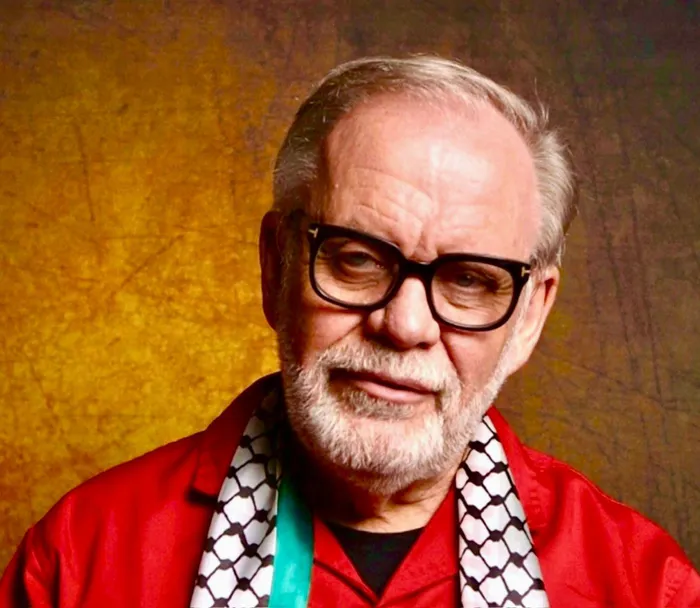
Marking the 63rd anniversary of Africa Day, Carl Niehaus argues that Africa’s liberation and development depend on full continental unity through a “United State of Africa”. The article calls for one African government, currency, passport, army and economic system to overcome colonial divisions, poverty and exploitation. Drawing on Pan-African ideals championed by leaders like Kwame Nkrumah, the piece says unity would strengthen Africa’s economic power, resource sovereignty and global influence. It also frames documentation and coordinated planning as tools for integration rather than exclusion, while positioning the EFF as a leading force behind radical Pan-African transformation.
Image: Supplied