

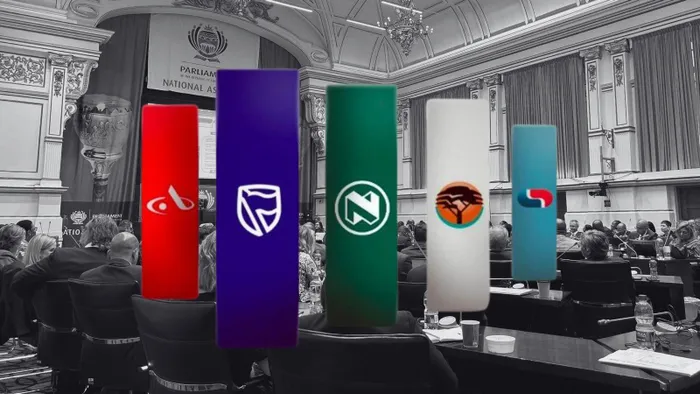
The relevance of banks is now increasingly dictated by customer experience rather than market share, says the writer.
Image: IOL
A reader posed a deceptively simple question in response to my recent piece on Pepkor: What happens to traditional banking norms over the long term? It is the right question. But it may already be outdated.
Because what we are witnessing is not pressure on banking norms. It is their quiet disappearance. Banking, as we have understood it, has always been defined by friction. You go to a bank. You open an account. You apply. You wait. You are assessed, approved, declined, and charged.
The system announces itself at every step. It reminds you that you are dealing with an institution. That model is not being disrupted. It is being dissolved. Not by new banks, not by regulation, and not even by technology alone. It is being dissolved at the point where people actually live their financial lives, inside everyday transactions.
A grocery purchase. A clothing account. A prepaid electricity top-up. This is where the shift is happening. Quietly. Repeatedly. At scale. And with each of these interactions, something subtle but profound is taking place. The customer is no longer stepping into banking.

nyaniso Qwesha
Image: Supplied
Banking is being absorbed into everything else. This is where traditional norms begin to break down. The idea that banking is a destination starts to feel outdated. The idea that financial services must be delivered by a bank starts to weaken. Even the notion of what an account is begins to blur. Because from the customer’s perspective, the question is no longer, “Which bank do I use?" It becomes, "Why do I need one at all in the way I used to?”
This is the long-term effect that matters. Not whether banks lose market share in the conventional sense, but whether they lose relevance in the customer’s mind. And relevance does not disappear through dramatic collapse. It erodes through substitution.
If a customer can access credit where they shop, transact where they earn, and manage value without ever entering a bank branch or app in the traditional sense, then the role of the bank shifts whether it intends to or not. It becomes background. Infrastructure.
Still necessary, but no longer visible. No longer defining the experience. This is the part many institutions underestimate. They are still competing on products, pricing, and digital features, while the real competition has moved somewhere else entirely. It has moved into behavior. Into habit. Into the places where financial decisions are made without being consciously recognised as “banking” decisions at all.
And once behaviour shifts, it rarely reverses. We have seen this before in other industries. Music did not die, but ownership gave way to access. Retail did not disappear, but physical stores lost their monopoly on the transaction.
Media did not collapse, but attention migrated to new formats that felt more immediate, more integrated into daily life.
Banking is now entering that phase. Not a collapse, but a redefinition. The danger for traditional players is not that they are unaware of change. It is that they interpret it through the wrong lens. They see new entrants as competitors to be matched, products to be replicated, and channels to be digitised. But this is not a product shift. It is a context shift.
The question is no longer how to bring customers into banking. It is whether banking can exist meaningfully outside the environments where customers already are.
And here is where the real tension lies. Because adapting to this shift requires something uncomfortable. It requires banks to accept that the future of their industry may involve becoming less visible, less central, and less in control of the customer relationship.
That is not a technological problem. It is a structural and psychological one. Institutions built on presence and control do not easily transition into being invisible and embedded. Yet that is precisely where the trajectory points.
The long-term effect on traditional banking norms, then, is not simply change. It is inversion. Where banking once demanded attention, it will now compete to avoid interrupting it. Where it once defined the transaction, it will now sit behind it.Where it once shaped behaviour, it will now respond to behavior formed elsewhere.
And the customer will not experience this as a revolution. They will experience it as convenience. As fewer steps. As less friction. As something that simply works. Which is why this shift is so powerful. Because the most transformative changes do not announce themselves. They embed themselves so deeply into daily life that they stop being noticed at all.
By the time the industry fully recognises what has happened, the customer will have already moved on. Not away from banking. But into a version of it that no longer looks, feels, or behaves like banking ever did before. And once that line is crossed, there is no going back.
Qwesha is a trade finance consultant with expertise in global commerce and risk management and regularly contributes to a number of publications