
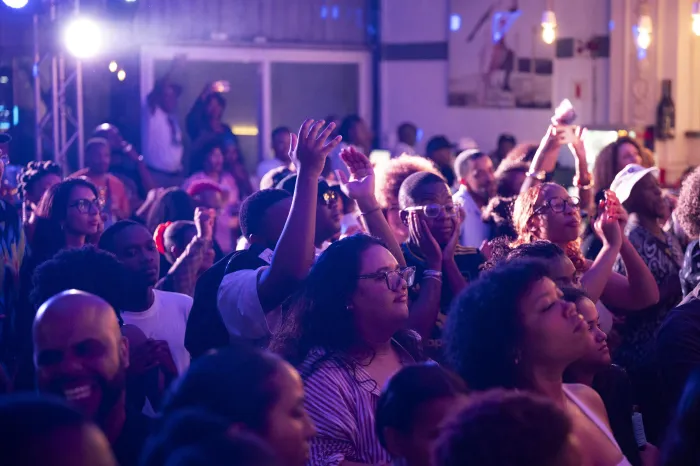
Discover how the Cape Town International Jazz Festival transcends mere entertainment, serving as a vital instrument for healing and unity in a divided society.
Image: Armand Hough / Independent Newspapers
In societies that have experienced division, inequality, and historical injustices, moments of collective celebration become more than just entertainment—they become instruments of healing. The annual jazz festival stands as one such moment. It is not merely an ordinary cultural event, but a powerful unifying force that brings people together across racial, social, and economic lines, playing a meaningful role in the ongoing work of reconciliation.
Music has always had a unique ability to cross boundaries that politics and policies often struggle to overcome. Jazz, in particular, carries a deep historical and cultural significance rooted in struggle, resilience, and creativity. Born from communities that used music as a form of expression during times of oppression, jazz today symbolises freedom, dialogue, and cultural exchange. When people gather at a jazz festival, they are not only attending a concert; they are participating in a shared human experience.
In South Africa, where the scars of apartheid still shape many social realities, spaces that encourage unity are vital. Festivals like the Cape Town International Jazz Festival demonstrate how art can bring together thousands of people from different backgrounds in a spirit of harmony. At such events, people who may never otherwise interact find themselves standing side by side, moved by the same rhythms and melodies. In that moment, differences fade and a sense of collective identity emerges.
Jazz festivals also create opportunities for cultural appreciation and dialogue. Local and international musicians share stages, blending traditions and sounds that reflect the diversity of humanity. Through this exchange, audiences gain exposure to different cultures and perspectives, which strengthens mutual respect and understanding. These interactions contribute to breaking down stereotypes and building bridges between communities.
Beyond the music itself, jazz festivals also have a strong social and economic impact. They support local artists, create employment opportunities, and stimulate tourism and small businesses. Vendors, technicians, hospitality workers, and young creatives all benefit from the economic activity generated by such events. In this way, the festival becomes not only a cultural celebration but also a platform for empowerment and community development.
Importantly, jazz festivals provide a safe and joyful space where people can reconnect with the spirit of togetherness. In a country that continues to navigate the complexities of transformation, reconciliation cannot be achieved only through formal institutions. It must also take place in everyday social spaces—through culture, art, and shared experiences that remind citizens of their common humanity.
Therefore, the annual jazz festival should be recognised not simply as an entertainment event but as a symbol of unity and hope. It shows that despite differences in language, race, or social background, people can still gather, celebrate, and move forward together.
In the sound of a saxophone, the rhythm of a drum, and the applause of a diverse audience, the message becomes clear: reconciliation is not only a political project—it is also a cultural journey. And through the universal language of jazz, that journey continues to find its rhythm.
* Masibongwe Sihlahla is an independent writer and social commentator.
** The views expressed do not necessarily reflect the views of IOL or Independent Media.