
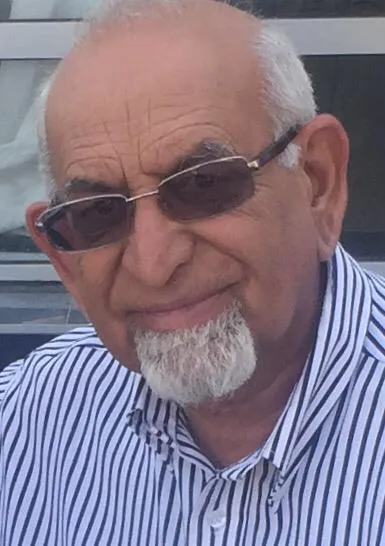
Iqbal Jassat
Image: Supplied
Now that Helen Zille has found her voice to denigrate South Africa's stance against Israel and America's illegitimate war on Iran, let's be reminded about her hypocrisy regarding the Gaza genocide.
During a TV interview in September 2025, Zille was asked if she believed Israel's actions in Gaza amounted to genocide. She responded: “Genocide is a very big word, and I haven't been to Gaza, and I don't know”.
Many critics pointed out that Zille's remarks were not at all surprising. Her views were consistent with the DA's pro-Israel stance, and in sharp contrast with the South African government’s legal campaign to charge Israel with genocide at the International Court of Justice (ICJ).
On US/Israel’s unprovoked war on Iran, she's pushed her "Genocide is a very big word" aside to yet again position herself in the corner of a war criminal, Benjamin Netanyahu.
How? By opposing South Africa's opposition to the imposed war.
Zille’s warning about South Africa’s relationship with Iran is cleverly couched in language presented as a matter of economic prudence and diplomatic realism.
The truth is that her stance is sinister, for it reveals something far more familiar: the tyrannical policing of Global South independence whenever it strays beyond Western approval.
The criticism she faced at the time on her refusal to denounce the genocide is captured most succinctly by Aslam Fataar & Imraan Buccus:
"Colonial powers justified their rule through denial. They portrayed indigenous peoples as inferior and depicted conquest as the progress of civilisation, development and law. Beneath this rhetoric of progress, there were forced removals, violent massacres and, most starkly, the genocide committed in Namibia in the early 1900s against the Herero and Nama peoples."
Hence, her current displeasure with the SA government’s position on Iran must be viewed within the context of Zionist terrorism, neo- colonialism, expansionism and US imperialism.
Her push to pressure severance of SA ties with the Islamic Republic of Iran does not emerge from neutral economic analysis but from a geopolitical order policed by Washington and its allies.
The same Western capitals demanding “balanced foreign policy” are currently underwriting Israel’s assault on Gaza while shielding it from accountability in international forums. Yet this glaring contradiction rarely enters the conversation.
Zille’s remarks echo a long-standing US/Zionist narrative which insists that countries of the Global South, including Iran,
are permitted sovereignty only within limits defined by Western strategic interests.
In other words, when states such as South Africa pursue independent diplomacy through platforms such as BRICS or deepen relations with countries outside the Western orbit, the language of “dangerous alliances” suddenly appears.
The beneficiaries of this narrative are not difficult to identify. Western governments seeking to isolate Iran, media platforms aligned with Atlanticist foreign policy circles, and political actors inside South Africa who remain ideologically tethered to Western legitimacy structures all gain from portraying South Africa’s diplomacy as reckless.
What is conveniently omitted is that South Africa’s post apartheid foreign policy has historically aligned with anti-colonial struggles and multilateral independence. Engagement with Iran, China, Russia, and other Global South actors is not an aberration. It is part of a broader refusal to submit to a unipolar order.
The pattern is unmistakable. When Western allies wage wars, impose sanctions, or violate international law, the language of “strategic partnership” prevails. When countries outside that orbit pursue cooperation, it becomes “dangerous alignment.”Zille is mistaken if she believes that the debate is solely about Iran.
Indeed, it is about whether South Africa is expected to remain diplomatically subordinate to Western geopolitical priorities.
It is appropriate to quote Ziyad Motala, who framed it profoundly in the following words:
"South Africa has placed its moral capital on the line by hauling Israel before the International Court of Justice (ICJ). In a world often numbed to Palestinian suffering, Pretoria has reminded humanity that law can still be a vessel of conscience".
Jassat is an Executive Member of the Media Review Network in Johannesburg