The Vaal accident: Children’s grief and trauma should never be turned into content
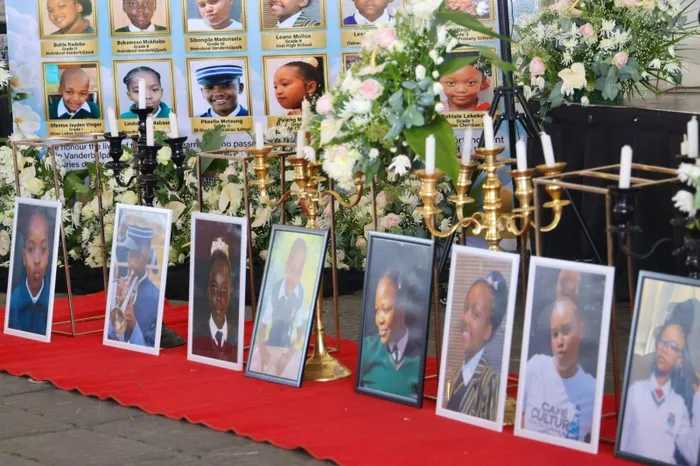
The Vaal tragedy has elicited deep sorrow across our community, highlighting the importance of empathy in times of grief. The tragedy quickly reverberated across social media; while many expressions of condolence were sincere, some responses crossed a troubling line, says the writer.
Image: Supplied
The year 2026 has hardly begun, yet on 19 January, South Africa lost 14 children in a school transport accident.
The grief felt by parents, classmates, and the wider community is profound. The tragedy quickly reverberated across social media; while many expressions of condolence were sincere, some responses crossed a troubling line.
One of the earliest distressing features of the online response was the spread of images said to show the deceased children. Photos of young bodies at the crash scene and injured pupils in hospital beds circulated widely. Some were real; others were misattributed or manipulated.
Once online, these images become content, permanent and searchable – they can be replayed, shared, mocked, or reframed years later. The idea that such images can “fade away” is a myth. Digital footprints create trails of information, memories, and associations that can be accessed and repurposed indefinitely.

Belinda Matore, an LLD candidate and project officer at the Centre for Human Rights in the Faculty of Law at the University of Pretoria
Image: Supplied
This permanence has profound psychological and rights implications. Studies show that online content about children can persist and be used in ways the original poster never intended. Children have a recognised right to privacy as individuals, not merely as extensions of their families.
Privacy is easily compromised when images or personal information is disseminated without consent, exposing children to harassment, profiling, or exploitation long after the event. Beyond images of the deceased, videos circulated of children being asked to pray for safer transport, drivers, buses, and taxis and for “this never to happen again”.
Some were filmed crying; others spoke about death or fear in ways they were not psychologically equipped to process. These videos were often shared with good intentions, framed as faith, hope, or community healing.
But intention does not cancel impact. Children are not symbols. They are not vessels for adult fear, guilt, or reassurance. When children are placed in front of a camera and asked to perform grief, prayer, or moral lessons after a tragedy, the line between comfort and psychological harm becomes dangerously thin.
For the children who survived the accident and for classmates, siblings, and peers, repeated exposure to to images and narratives of death can be deeply unsettling. Trauma is not only experienced directly; it is also absorbed through repetition, storytelling, and imagery.
Seeing injured children in hospital beds, hearing constant references to death, or being asked to publicly pray about something terrifying can embed fear rather than resolve it. This is a direct violation of children’s right to privacy, recognised internationally in article 16 of the UN Convention on the Rights of the Child.
Children have the right to protection from exploitation and exposure, including the right to have private and vulnerable moments safeguarded from public circulation. Further, the constitutional protections in South Africa underscore the risks of sharing images of children in trauma. Section 14 of the Constitution guarantees everyone the right to privacy, including protection from intrusion into one's person.
For children, this right intersects with Section 28(2), which prioritises a child’s best interests. The circulation of images of deceased or injured children or videos of children praying about trauma can be seen as a violation of both privacy and best-interest obligations. Platforms and individuals sharing such content without consent may therefore be exposing themselves to legal scrutiny under both constitutional
Page 2 of 2 and statutory frameworks, including POPIA, which governs the collection and sharing of personal information, including images; the Children’s Act 38 of 2005, which protects children from exploitation and abuse; and the Film and Publications Act, which further criminalises the distribution of harmful content depicting children. Yet, these legal protections are often unenforced in online spaces, leaving children vulnerable.
Recent institutional work underscores the urgency of strengthening children’s protections online. Civil society research by Moxii Africa reveals that South African children themselves are demanding stronger privacy safeguards, highlighting insufficient platform protections for minors’ data and exposure. Government initiatives, including plans led by the Department of Basic Education and the Information Regulator, show growing recognition of children’s rights in cyberspace.
The South African Human Rights Commission’s Social Media Charter stresses that identifying children online should be approached with caution, as such exposure creates permanent public records that can harm privacy, dignity, and safety.
These developments show that South Africa is moving towards enforcing existing laws protecting children online. Platforms, however, must adopt stronger moderation, implement mandatory takedowns of post-trauma content, and establish clear consent guidelines. Adults also need education on the risks of sharing children’s grief.
The Vaal accident reminds us that tragedy echoes online. Children’s grief should never become content. Care, not cameras, is the duty of all who witness it, and the law, platforms, and society share a responsibility to protect their privacy, dignity, and right to grieve.
Belinda Matore, an LLD candidate and project officer at the Centre for Human Rights in the Faculty of Law at the University of Pretoria