

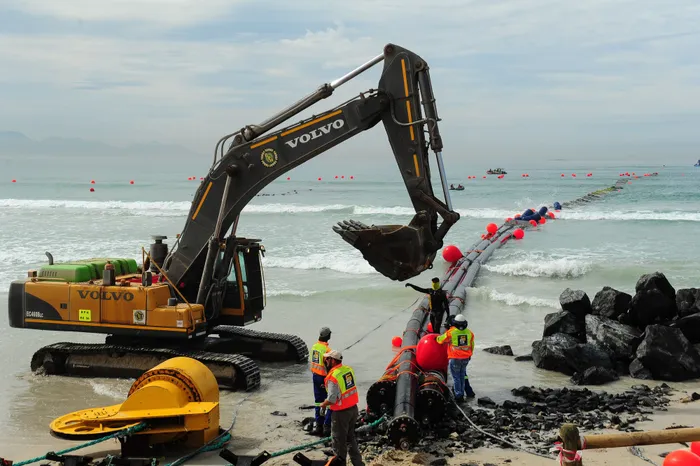
Engineers seen moving large pipes into place with the help of excavators and tugboats at the Strandfontein Pavilion Desalination site in 2018.
Image: Henk Kruger/Independent Newspapers
A feasibility study tabled at the City of Cape Town’s mayoral committee has indicated that the proposed R5 billion Paarden Eiland Desalination Plant could result in a steep bump in water tariffs for ratepayers.
The study, which was presented at a recent mayoral committee meeting, indicates that the plant could significantly increase water bills within the first two years of operating.
The city intends for the plant to produce between 50 million and 70 million litres of potable water per day, with the aim of securing an additional 300 million litres of water from diversified sources.
In the report, it explains that modelling conducted as part of the value assessment found that the impact of the Desalination Project results in an approximate “additional project-specific water tariff increase (over and above the base inflationary increase) of 6.57% and 6.63%” in the first two years of operating.
“It should be noted that the city is also in engagements with the National Treasury to identify options to pursue Grant funding for the project to mitigate the expected tariff impacts. These discussions will continue in the procurement phase of the project to mitigate the cost to the city where feasible.
“The affordability assessment cannot be complete without also considering the economic impact of water restrictions on households and businesses, and their willingness to pay to avoid these water restrictions and therefore absorb the proposed tariff increases,” the report states.
The report also found that the recommended service delivery mechanism for the desalination project is through a public-private partnership (PPP).
“The recommended PPP structure is for the private party to design, finance, build, operate and maintain the plant for a 20-year contract period after which it will be transferred to the city. The city can then either outsource the operation for another duration or elect to operate the plant with internal resources. Ownership of the plant always vests with the city.
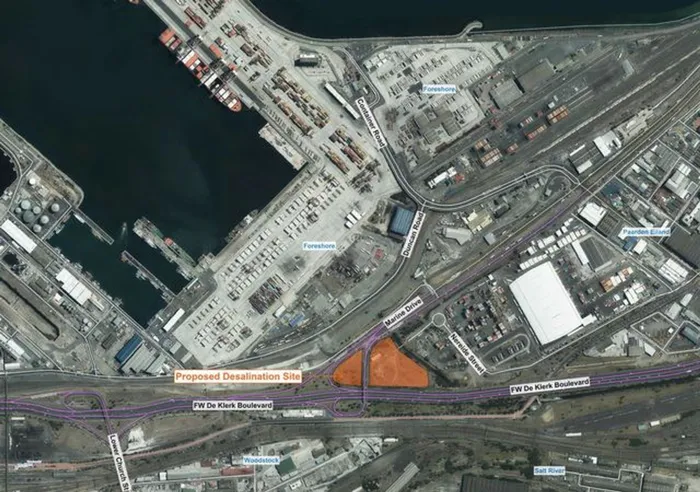
Proposed permanent desalination plant in Paarden Eiland.
Image: Supplied
“As a mechanism of service delivery, municipal PPP is firmly in line with the intent of the MFMA (Municipal Finance Management Act) and the MSA (Municipal Systems Act).
“One of the primary benefits of the PPP mechanism is that risk is allocated to the party best qualified and suited to manage it. The unique risk profile of desalination projects makes these facilities particularly well-suited to benefit from a PPP,” the report mentions.
“This model transfers a significant proportion of the project risks to the private party and has historically proven to offer the greatest opportunity to achieve Value for Money when the procurement documents and risk allocation is structured appropriately. The indications are that the project will be affordable.”
The city was contacted for comment on whether it will be able to ensure affordability for low-income households when the desalination costs start affecting the tariffs, but they said that they would respond on Monday.
STOP CoCT founder Sandra Dickinson said that the Paarden Eiland desalination plant is planned to provide 50 to 70 million litres of potable water daily by around 2030.
“This project, costing around R5 billion, will be funded through water tariffs, which can cause water to become even more expensive for Capetonians.
“The plant faces severe criticism because it will draw seawater near polluted harbour areas, raising concerns about water quality and treatment challenges. It is also extremely energy-intensive and expensive to operate, which may further lead to significant increases in water tariffs,” Dickinson said.
“Past experiences with temporary desalination plants saw high maintenance costs and operational difficulties, prompting calls for the city to consider alternative water sources.”
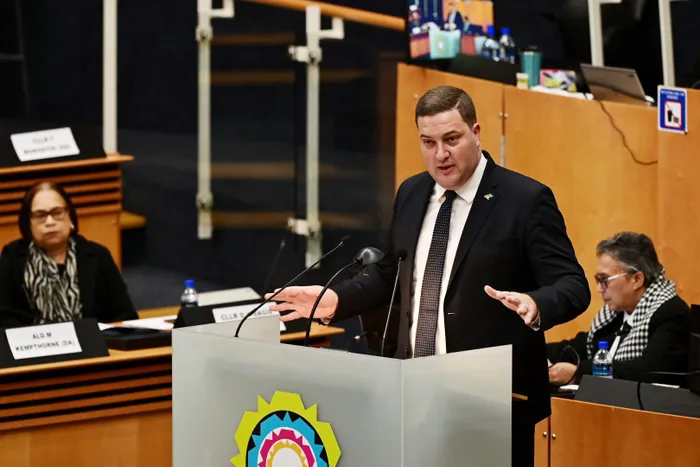
Mayor Geordin Hill-Lewis.
Image: Supplied
The city is already facing challenges over tariffs, with the Western Cape High Court hearing the challenge from the South African Property Owners Association (SAPOA) and AfriForum.
SAPOA’s membership currently comprises more than 90% of the country’s commercial and retail property industry, including some of the largest property-owning companies in South Africa.
SAPOA is challenging the city’s fixed tariffs and their decision to link certain fixed charges to property values.
In its replying affidavit, SAPOA slammed Mayor Geordin Hill-Lewis, accusing him of unfairly portraying property owners as being wealthy enough not to feel the impact of the tariffs.
SAPOA is asking for the three tariffs in the Budget, namely the cleaning tariff, the fixed water charge, and the fixed sanitation charge be declared unconstitutional and invalid.
AfriForum wants to have the budget declared invalid until the end of the 2025/2026 financial year, 30 June 2026, “to allow the city to rectify the defects”.
The High Court is set to hear the case from Tuesday this week.
theolin.tembo@inl.co.za