

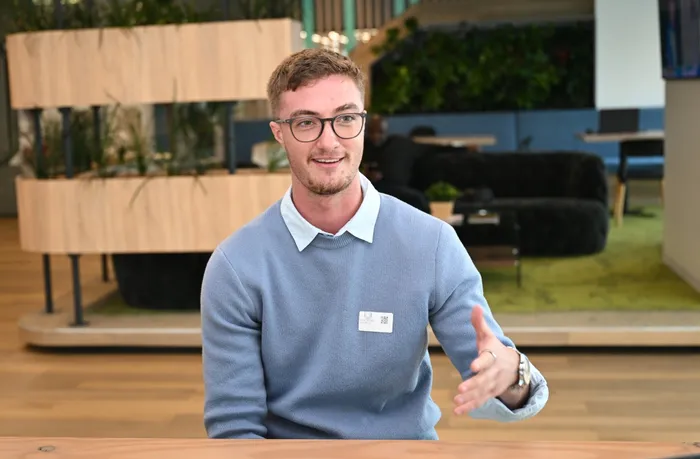
Danté Strydom
Image: Ayanda Ndamane
All Clarisse Strydom ever wanted was to look like a man, sound like a man, and love a woman as a man.
Now, at 24, that dream has finally come true — Clarisse is now Danté, a straight man.
With a full beard, a deep voice, and finally living life as the man he always wanted to be, Danté is today going public about his transition for the very first time.
"It is Human Rights Day in 2026, and much has changed since a time when queer and trans rights did not exist," Danté, who lives in Cape Town, also known as the Pink City, said.
“We have come a long way, and I am proud of who I am today.
"I am proud of myself, and because many people do not know about my transition, like my colleagues at work, this is the right time for me to tell my story.”
But the road to this moment was anything but easy for Danté, who works at a gaming company.
He was born in conservative Pretoria and grew up a self-described "tomboy", juxtaposing the frilly, picture-perfect lives of his twin and older sisters, with whom he shares a close bond and looks up to.
The contrast was clear even in simple childhood games, like "house house".
"House house” is a children’s game where kids act out roles like parents, kids, and siblings, mimicking a household.
"When we played those games, I was always the brother, the boyfriend, the dad or the whatever," Danté said.
"I was always the male character in our games."
He said he also dressed badly.
“I did not dress pretty," he said.
"I dressed atrociously. I was the typical tomboy, short hair, and just not like any other girl.”
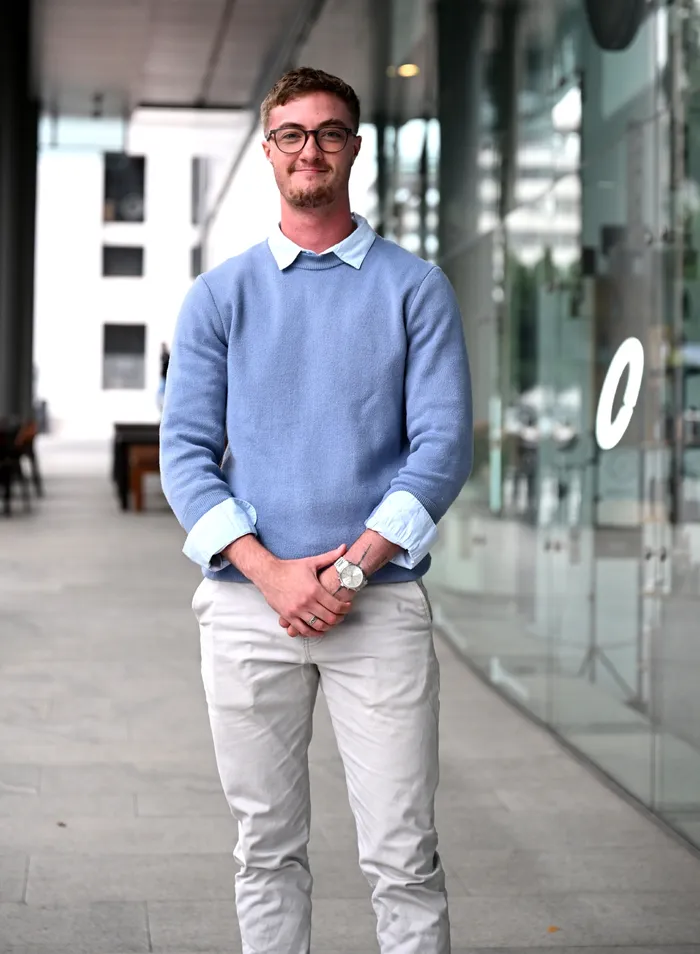
Danté Strydom
Image: Ayanda Ndamane
Danté, who said he was always very interested in other girls, was also bullied growing up.
But, he said, being in an all-girls school made it not too bad.
"Other than that, I must say, it was a very fun experience," he said.
He said the "boyish behaviour" never left him — so much so that by his mid-teens, after chatting with a transgender person online, he knew this was who he was meant to be.
“I actually came across my first transgender person online when I was in grade 8," Danté said.
"Then they explained how they felt and I was like, this is kind of how I feel.
"I immediately did more research."
Though it is what he wanted deep down, he kept trying to bury the feeling.
“I denied it for years, to be honest," he said.
"I was just like 'no, I probably just like girls, I’m just lesbian'.”
Danté then lived out and proud as a lesbian for a time, but it "never fit, never felt right".
“I just didn’t feel comfortable, it just didn’t sit well with me," he said.
"I dated my first girlfriend and yeah, it just didn’t sit well with me.”
In the end, he could no longer fight what he had always known about himself.
“I just said 'you know what, it’s not going to change and I don’t want to be like this'.
"But I was not sure how to change it.”
He said it was then that he finally understood he wanted to start the journey to becoming a man.
But before he could embark on this life-changing journey, he had to tell his parents.
Danté said the conversation was at times heated, with emotions running high.
“We had a big fight about it but it was more out of concern than actual rejection," he said.
"They warned me it would have consequences — how it could change their lives, mine in the future, and how the world would treat me."
Over time, they came around — and stood by him.
The process of becoming a man then finally began two years ago and included medical support to help his body match who he truly was.
This involved hormone treatment, which deepened his voice and helped him grow a beard.
“My mom actually helped me find my doctor, and we went together as a family,” he said.
“They call me he, him.
"My mom even gave me my new name.
“I’m one of the most fortunate people when it comes to family, especially having a different lifestyle than everyone else.”
He said the journey was tough.
“It was hard, I must say, because you have to convince people that you’re mentally ready to do it.”
The changes took time.
“I would say about three months in my voice definitely dropped quite a lot but everything else came after a year and a half," he said.
Danté said it was only after transitioning that he realised he enjoyed kissing men.
“I wasn’t 100% sure who I was as a person,” he said.
“I was sure about the transition — that I’m a man — but all the things I discovered after just made it hard to cope at times.”
Before transitioning, he said, he was completely against dating or kissing men.
“I was like, 'nope, I’m straight, 100% straight'.”
But after his transition, so much changed.
“I started meeting proper gentlemen," Danté said.
"They were nice guys, not bullies, not teasing about certain things.
"And I thought, actually, guys aren’t that bad.
"Then I kissed my first guy, and I realised, it’s not so bad after all.”
That opened a whole new way of discovering himself.
“I started asking, 'OK, what else can I learn about myself? I’d always restricted myself before because I wasn’t comfortable living as me.
"Now I am. Now I can do what I want.
"So I took the time to explore, and I have no regrets. None at all.”
At the same time, he had to fight through a long, frustrating process to change his identity documents.
“That was a very shitty process, to be honest, that was a year and a half of struggling with everything.
“I think I went back about seven times just to actually get it going.”
Now, with his new ID, he can really see the difference.
“I finally got my new ID this year, and compared to my old one, it’s a big change," he said.
He has since moved to Cape Town, where life feels more open.
“When I moved to Cape Town, it was a completely different experience.
"It’s more open here, and everyone’s just out doing their thing.”
Still, he said many people do not fully understand what it means to be transgender.
“People kept asking questions, but I would rather sit through that uncomfortable moment and answer them so no one else has to,” he said.
“They’re trying to learn, they just don’t always know the right way to do it.”
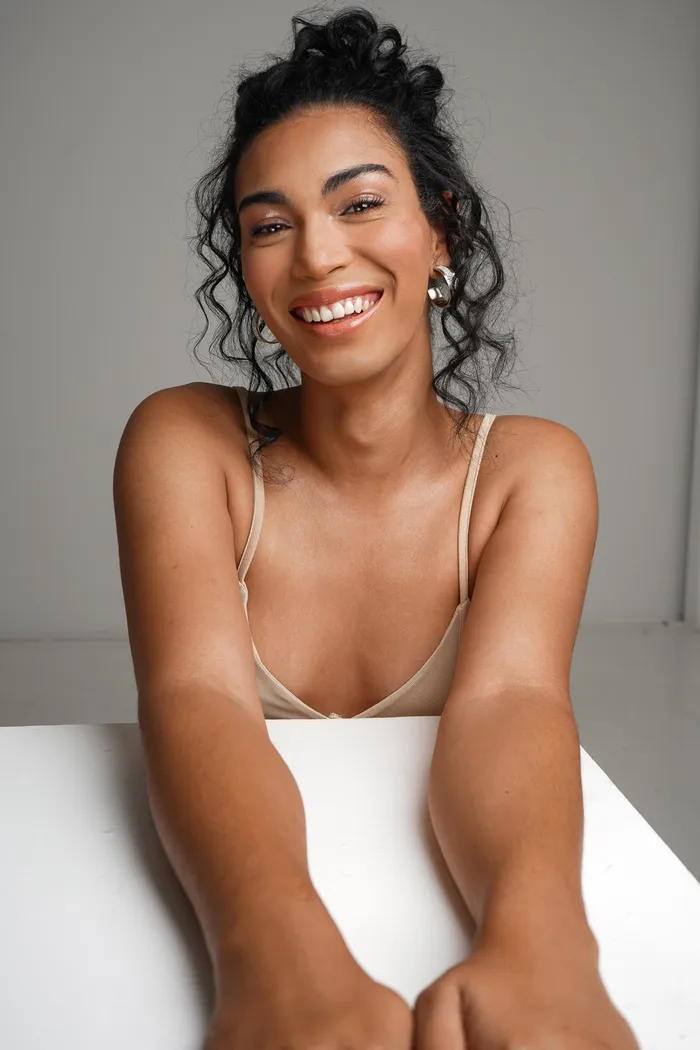
'It is such a privilege to be able to see myself in the mirror as I feel on the inside — a woman.'
Image: Kendall Leigh Cupido
Cape Town-born Kendall Leigh Cupido said she was celebrating Human Rights Day knowing she is accepted by society.
She began her physical transition from male to female at 18.
“As Nelson Mandela said, no one is free until we are all free and that is a fundamental truth when it comes to rights," Cupido said.
"I have always believed that queer and trans rights are human rights, and I am blessed and lucky to live in a country where all people are celebrated."
She said her transitioning experience was unique.
"It was accepted by my entire family, and I received a lot of support during my transition," Cupido said.
"It is such a privilege to be able to see myself in the mirror as I feel on the inside — a woman.
"Growing up in the southern suburbs of Cape Town, I have never felt more myself than I do right now.”
However, Cupido said, there was still significant misunderstanding around gender identity and transitioning.
On why recognising and respecting a person’s transition is a human rights issue, Cupido said: “It’s simple to me, I am a woman, and therefore I should have the right to be recognised as a woman in the way of my choosing.
"What is very important to me, as a trans woman who also has a public platform through performance, pageantry and modelling, is that I am proud to be an example to those who may not have the safety or support that I had, especially my brothers and sisters across Africa, where it is not as accepted and often persecuted.”
She said SA’s Constitution was considered one of the most progressive in the world regarding equality.
But in practice, Cupido said, there was more work to do to ensure transgender people can fully exercise their rights.
“With the health programmes that support, among other things, transitioning, costs are extremely high and now out of reach for many of the most vulnerable members of our community.
"While having rights is incredible, having the support and facilities to exercise them would be a fantastic step in the right direction.
"However, we also celebrate how far we have come, and how safe this country is compared to other African countries and others around the world.”
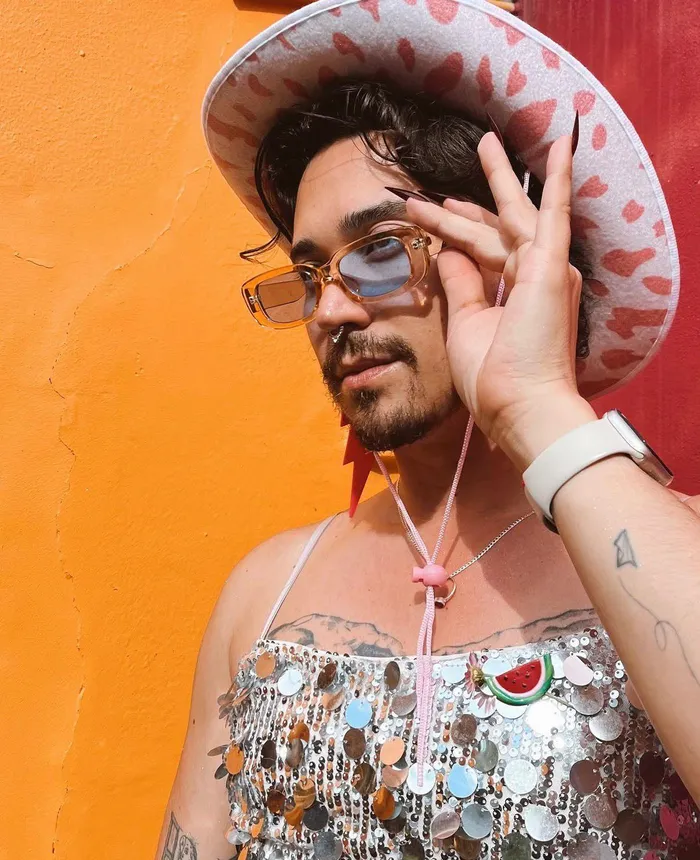
'It is important for people to realise that gender is a spectrum, not a binary. Because of religion and cultural pressure, people have been taught to fit in a box, while in reality gender identity is fluid.'
Image: Shaun Lavagna-Slater
Shaun Lavagna-Slater, who now lives in Cape Town but grew up in Vanderbijlpark, said they identify as non-binary.
The 34-year-old said their experiences growing up in Vanderbijlpark were very different from what they experience now in Cape Town.
“Human rights is a celebration but also a reflection," Lavagna-Slater said.
"In SA, we have one of the most protected constitutions, but we still have a long way to go — you cannot separate human rights and queer rights; they are mutually inclusive.
“Growing up in Vanderbijlpark, my experiences were vastly different from the freedoms I enjoy in Cape Town now, in my early 30s.
"This shows how far the country has come, and it gives me hope that we can continue on this positive path.”
Non-binary identities are still widely misunderstood.
“It is important for people to realise that gender is a spectrum, not a binary.
"Because of religion and cultural pressure, people have been taught to fit in a box, while in reality gender identity is fluid.
"There are many protections already: knowing your rights, understanding how your self-expression is protected, and knowing what steps to take if those rights are challenged.
"It is about knowing the language and the tools to assert yourself.”
SA has allowed transgender people to change their legal gender since the early 2000s.
In 2003, Parliament passed the Alteration of Sex Description and Sex Status Act.
It came into force the following year.
Under this law, people who have undergone medical or surgical treatment related to gender reassignment can apply to change the sex recorded on their birth certificate and identity documents.
In parts of Africa, the Middle East, Asia and beyond, the LGBTQIA+ community still face harsh legal penalties simply for who they are.
In countries such as Burkina Faso, Tanzania, Chad and Senegal, same-sex relationships and gender non-conformity are illegal and can carry prison sentences under laws that criminalise “acts against nature” or “homosexual acts".
In others — including Somalia, Nigeria, Saudi Arabia, Iran, Yemen and Uganda — the penalties can be even more severe, with some nations prescribing the death penalty for consensual same-sex sexual activity.
IOL