

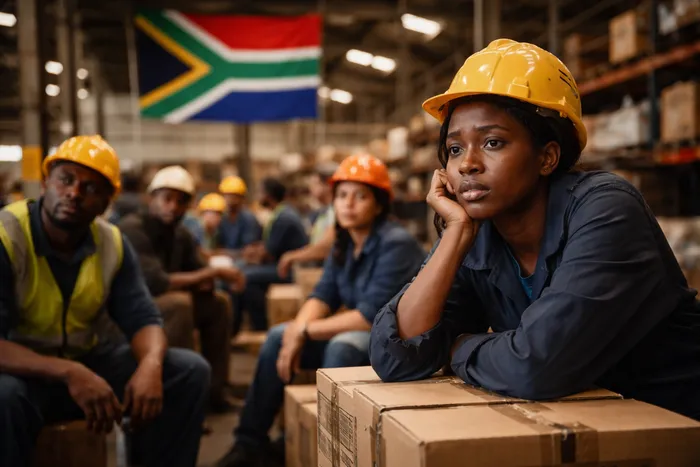
In an era defined by economic pressure, job insecurity, and soaring living costs, the mental strain arising from modern work environments is alarming.
Image: Sora
As South Africa marks Human Rights Day, a time dedicated to reflecting on constitutional rights encompassing human dignity and fair labour practices, it is crucial to acknowledge the often-overlooked arena: the workplace.
The conditions employees face while striving to provide for themselves and their families merit just as much attention as the broader social issues affecting their lives.
In an era defined by economic pressure, job insecurity, and soaring living costs, the mental strain arising from modern work environments is alarming.
Employees today find their days inundated with a relentless barrage of demands: from constant meetings, barrage of messages, and looming deadlines to the pervasive presence of technology that fragments attention.
The line between personal time and work has increasingly blurred, causing individuals to stretch their work into after-hours’ catch-up that paradoxically chips away at their productivity and mental well-being.
Despite their commitment and efforts, many remain unaware of the detrimental effects these challenges bring, with recent Gallup research (2024) revealing that a staggering 36% of employees experience daily stress, while over 70% report feeling disengaged at work.
Past decades have witnessed a frenetic pace of work restructuring propelled by technological advancements. Speed and connectivity have become the new norms, with teams collaborating across time zones and an ever-pressing demand for instantaneous responses.
The rise of artificial intelligence has only accelerated this narrative, automating tasks at an unprecedented scale and reshaping the dynamics of work. Yet, as these systems evolve, humans struggle to keep pace, revealing a deep-seated flaw in how modern tasks are designed.
Human beings do not operate like the machines they interact with; they thrive on a rhythm of effort interspersed with adequate recovery. Continuous demand without respite leads to a cycle of strain that can undermine both mental and physical capabilities.
When the inevitable cracks begin to show, the prevailing misconception often frames arising challenges as personal shortcomings, expecting employees to develop resilience or improve stress management, typically too late in the game. The reality, however, is that consistent workplace challenges stem not solely from individual performance but from the systemic pressures shaped by organisational culture.
While companies often tout a strong workplace culture as vital to employee engagement, the daily realities of pressure-laden expectations and disjointed work structures are determining factors in actual performance. When prevailing conditions are misaligned with anticipated outcomes, employees are left feeling ineffective despite their dedication and hard work.
This dissonance not only affects individuals but permeates entire organisations, resulting in diminished morale, increased turnover, high absenteeism, and decreased productivity. Thus, work-related stress evolves from an individual issue to an overarching organisational challenge demanding immediate attention.
To harness the best from their teams, organisations must embrace the opportunity to reimagine work structures. Competing in today’s fast-paced landscape does not necessitate sacrificing employee health; rather, it presents an opportunity to navigate expectations effectively.
A shift is required that redefines corporate culture through a lens of performance sustainability. An environment where employees can thrive reflects an understanding that when clarity, support, and reasonable expectations are in place, engagement and productivity naturally flourish.
As the influence of technology continues to reshape the workplace, the role of employees evolves dramatically. Advanced systems will undoubtedly enhance efficiency, yet they cannot replicate the essential human elements of judgment and decision-making. Thus, maintaining mental energy, clear focus, and the capacity to adapt becomes paramount.
In the spirit of Human Rights Day, attention must now turn towards advocating for work environments that nurture physical and mental well-being. Employees deserve spaces that allow them to perform well without sacrificing their vitality.
Ultimately, work should inspire growth and contribution without becoming a source of undue harm, ensuring a balanced approach that enables individuals to navigate their professional lives while still having the energy to engage in their personal lives.
IOL