
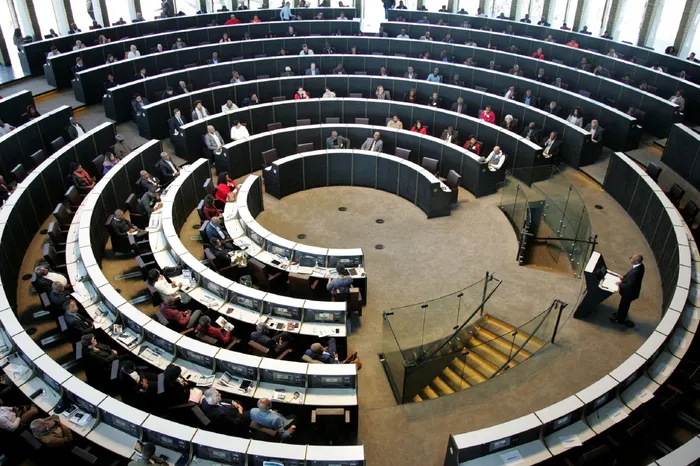
The City of Johannesburg faces water supply and major infrastructure challenges. Will the mayoral candidates fix the problems once elected?
Image: Nhlanhla Phillips / Independent Newspapers
Candidates vying for the mayoral position in the City of Johannesburg have vowed to address challenges the City of Gold faces, ahead of the 2026 Local Government Elections.
Johannesburg, the richest city on the African continent by Gross Domestic Product (GDP), faces water challenges, crumbling infrastructure, a high crime rate, including gangsterism, and unemployment, among others. It is currently coalition-led, and the ANC has the mayor and deputy mayor positions.
Candidates from the ANC, DA, and ActionSA vying for the top position in the City of Gold say they will rebuild Johannesburg if residents elect them to become mayor.
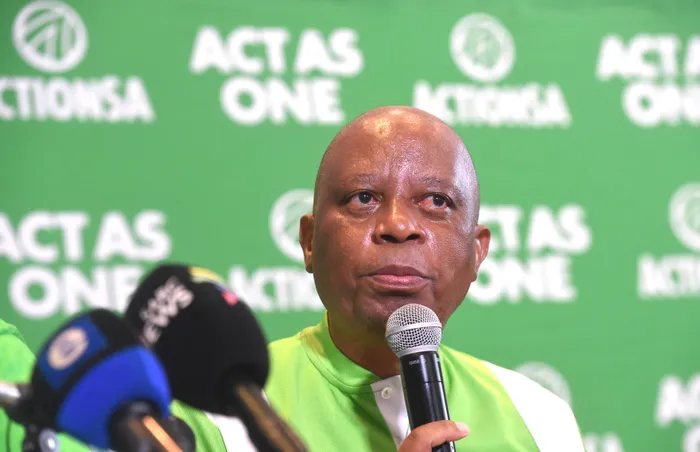
Herman Mashaba, ActionSA leader and Johannesburg mayoral candidate.
Image: Itumeleng English / Independent Newspapers
ActionSA leader Herman Mashaba, who is the former mayor of the city, said he would prioritise unemployment, the high crime rate, drug dealing, hijacked buildings, dry taps, broken streetlights, and illegal immigration.
“Johannesburg is in a dire state at the moment. It needs all the departments to operate and hit the ground running. Our people are sitting with high unemployment, high crime rate, drug-dealing, hijacked buildings, dry taps, and broken streetlights. Our social fabric is broken, particularly in poor communities, because of high unemployment and drugs,” Mashaba said.
He stated that he will put together a very strong team (political) of the mayoral committee within 60 to 90 days in office. He said he would prioritise ethical and skilled people, emphasising the need for a capable city manager.
“For MMC of Finance, it will be someone with a very strong financial background and understanding of government. On infrastructure, we need an ethical engineer as an MMC. We also need leaders with a social background, because societal norms are crumbling,” Mashaba said.
He also said that inner-city rejuvenation will take centre stage.
“The inner city rejuvenation plan, which we passed in the 2017/18 financial year, we had already identified over 600 properties and sites. 154 had already been awarded to the private sector, producing 14,500 housing units, 30% of them being for low-income earners and students, and I had committed to releasing a minimum of 100 unit properties every month,” he said.
He added: “The last council meeting I attended, while serving a month’s notice, I presented the report to the council of 37 factories in and around Alexandra in Wynberg, which had closed down.
“Because they owed the city a lot of money, we had to expropriate them. It was just for the next administration to put them out to tender to the private sector to build affordable accommodation for our people, so that we get our people out of informal settlements.”
Mashaba said he will clamp down on illegal immigration by ensuring that undocumented individuals are removed from the City of Johannesburg.
“We will establish a special unit within the Johannesburg Metro Police Department (JMPD) to identify undocumented individuals living in our city, and we will hand them over to Home Affairs for deportation,” he stated.
Home Affairs must make sure that they have enough space, because illegal immigrants will be sent to them daily, he said.
Mashaba explained that during his tenure, he attracted private sector investment to the city.
“In 2016/17, the city achieved R4.5 billion in facilitated investment. By the end of 2017/18, the city nearly doubled its investment by bringing in R8.7 billion. The trend of doubling year‐on‐year inwards investment was repeated in the following year, when the city achieved R17.3 billion in facilitated investment by the end of the 2018/19 financial year.”
He stated that he would do away with entities such as City Power, Joburg Water, and Johannesburg Roads Agency, keeping only a few critical ones.
“They will become units under the municipality, and must be run by the executive directors, put together in a management team. Then the executive directors report directly to the city manager, NOT to the board of City Power, etc.”
He added that he will dissolve the boards responsible for the entities, because they are a waste of resources.
“Secondly, the boards delay service delivery because, as a mayor, every time streetlights are not working, there is a pothole, or the taps are dry, I couldn’t go through to the board. In my previous term, I had to go through the city manager, and the city manager had to go through the board,” he said.
The dissolution report for entities, he said, would be prioritised within the first or second council meeting.
He said when he returns, key services such as cleaning and security will continue to be in-sourced because the city’s properties must be cleaned every day. He said this will give ‘our’ people dignity through permanent employment with benefits.
“Corruption will be dealt with, whether it involves political leadership, coalition partners, or employees,” Mashaba stated.
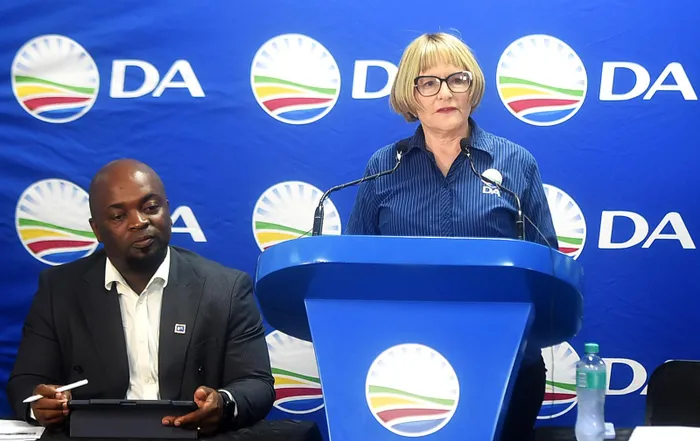
Helen Zille, DA Johannesburg mayoral candidate.
Image: Itumeleng English / Independent Newspapers
Helen Zille, the DA’s Johannesburg mayoral candidate, stated during the recent launch of her five pledges, that once elected, “we’ will stop the rot, fix what is broken, and rebuild Joburg into a city its residents can be proud of”.
She has vowed to turn Johannesburg into a city that delivers reliable services, ethical leadership, safer communities, and real opportunities to work, live, and succeed.
Her pledges include reliable water and electricity for all residents, roads that work, attracting 200,000 new jobs to Joburg, restoring law and order by ending corruption, making public spaces safer, and professionalising the government.
“We will stop the stealing and wasting of money. We will ring-fence revenues paid for the most important services and invest in improving those services. We will hire competent professionals, reward good performance, and punish poor performance,” Zille said.
She has also promised a fair billing system, filling potholes within 72 hours, getting 95% of traffic lights working, and repainting road markings.
“We will be tough on crime, reclaim hijacked buildings, and stop land invasions. We will have zero tolerance for illegal immigration. We will listen to whistle-blowers, protect them, and fire corrupt officials,” she stated.
Sasabona Manganye, ANC Johannesburg regional secretary, said that while the party has not yet announced its mayoral candidate for Johannesburg, they intend to improve service delivery, fix water supply, address infrastructure challenges, and create employment opportunities.
Manganye said his region is awaiting the ANC National Executive Committee (NEC) to finalise the framework for the mayoral candidate.
He stated that the refurbishment of the water infrastructure is key to resolving the city’s water challenges.
“We can solve the problems temporarily by fixing the burst pipes, but the long-term view is to build reservoirs that have the capacity to keep water for a few days when maintenance is ongoing,” Manganye said.
He mentioned that in November 2025, many residents suffered during a planned maintenance by Rand Water, because the city did not have the capacity to retain water.
“The city is suffering 45% losses of treated water. This is too much. It means that we lose nearly half of what we receive from Rand Water, even before we distribute it to residents. These water losses are caused by ailing infrastructure, the mushrooming informal settlements, and illegal connections in the water network.”
He added that the long-term plan to address water challenges will not work if Johannesburg does not deal with its water network/infrastructure.
He said, where corruption exists, they will act, because corruption reverses gains and progress.
Dealing with illegal immigration is one of our priorities, Manganye said.
He stated that formalising the township economy and opening doors to transparent public-private partnerships will help rebuild.
“We will focus on youth entrepreneurship and digital skills, and building capacity to reduce reliance on outsourcing,” Manganye stated.
Professor Siphamandla Zondi, a political analyst from the University of Johannesburg, said the 2026 Local Government Elections will likely be decided on both competence judgment and fatigue with the common way of doing politics.
“It seems a portion of the voting public is looking for a break with the norm, a new way of doing things, something that injects hope. The small and emerging organisations have a chance to present such to the public,” Zondi stated.
gcwalisile.khanyile@inl.co.za