
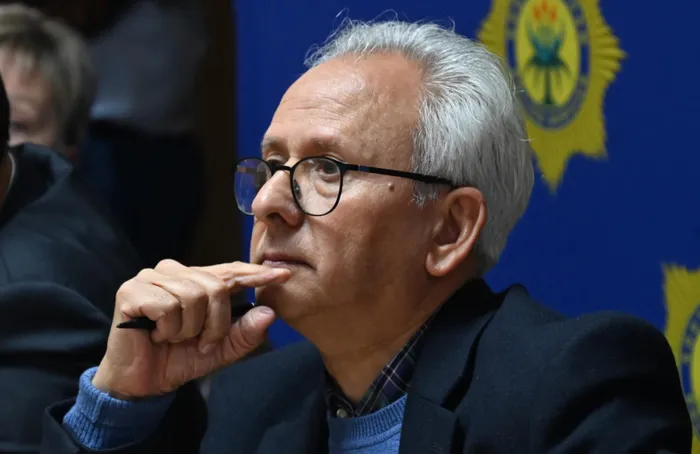
Acting Police Minister Firoz Cachalia has indicated a lack of trust that Cape Town's proposed 3m high, 8km long security wall along the N2 Highway, will stop crime.
Image: Ayanda Ndamane / Independent Newspapers
Acting Police Minister Firoz Cachalia is skeptical and a lack of trust that the City of Cape Town's proposed R120 million N2 security wall project is unlikely to stop crime.
He said that this project does not replace real police work.
The City’s N2 Edge project, informally called the N2 wall project, would seek to replace and reinforce a severely deteriorated security barrier along the N2, alongside a package of safety and community-focused interventions.
Announced by Mayor Geordin Hill-Lewis in early 2026, the project aims to curb violent crime, especially 'smash-and-grab' attacks on the route colloquially known as the 'Hell Run'.
Critics, including political parties such as the Good Party and Build One South Africa (BOSA), argued that the project will entrench “apartheid-era spatial planning” by physically segregating communities.
Khayelitsha residents and activists contended that the money should be prioritised for basic services, such as housing, unmaintained toilets, and floodlights, rather than a barrier they view as “dehumanising”.
Some residents argue the wall is designed to protect tourists and wealthy travelers, while leaving township residents “trapped” in unsafe conditions without improved internal security.
In a written reply to Bosa’s parliamentary question, Cachalia stated that the SAPS has determined that the proposed building is not considered a replacement for the need for active, on-the-ground policing and better criminal investigations.
“While the construction of a highway wall along the N2 may contribute to situational crime prevention by restricting pedestrian access to the roadway and potentially reducing certain opportunistic crimes directed at motorists, infrastructure interventions cannot replace core policing functions,” said Cachalia, adding that the construction of the wall will not directly address organised criminal activity operating beyond the immediate roadside environment, firearm-related offences, gang-related violence, or broader public order challenges affecting surrounding communities.
The City’s MMC for Safety and Security, Alderman Jean-Pierre Smith, said the ongoing politicking surrounding the N2 wall by opposition parties indicates that these parties 'prioritise politics over the needs of the people'.
"While they continue to distort the narrative around this issue, people are still falling victim to crime incidents on the N2. The City remains committed to safeguarding our residents and will not be swayed by the opinions of opposition politicians or an acting minister who continues to fail communities across the metro,” said Smith.
Smith said the infrastructure is just one part of the safety picture and must be complemented by effective policing and prosecutions.
“This is why the City has been calling for the urgent proper resourcing of SAPS, as well as the devolution of crime investigation powers to City officers, who are ready to help build prosecution-ready case dockets in support of the SAPS and the National Prosecuting Authority (NPA),” he said.
However, BOSA said it has long been held that the proposed wall is more of a cosmetic intervention than a crime-fighting strategy.
The party said a R120m barrier along the highway used by thousands of people travelling between the airport and the city each day risks echoing the spatial logic of the past, adding that symbolically, the City will use infrastructure to divide communities and keep poverty out of sight.
“For many residents, the project mirrors the thinking of apartheid spatial planning. Separate communities and shield inequality from those passing by. Crime cannot be walled away, and South Africa cannot build barriers high enough to hide the reality of poverty and inequality,” said BOSA spokesperson Roger Solomons.
Solomons added that the real safety will come from effective policing, intelligence-led operations, proper investigative capacity, and meaningful investment in communities, adding that the concrete walls act as a temporary measure to obscure deeper problems.
Meanwhile, Cachalia said to address safety concerns impacting nearby residents and road users, the SAPS continues to implement sustained operational measures, including high-visibility patrols, intelligence-led operations, targeted deployments of specialised units where threat assessments require, collaboration with municipal law enforcement agencies, and focused investigative efforts aimed at securing arrests and successful prosecutions.
He also emphasised that effective crime reduction requires an integrated approach combining environmental design interventions with sustained policing, intelligence, and prosecutorial action.
manyane.manyane@inl.co.za