
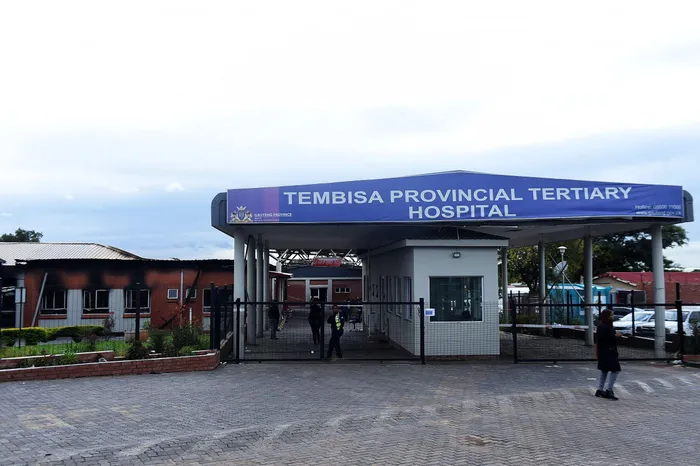
A research by the State Capture and Beyond (SCAB) has shown how maladministration, inaction, and corruption have weakened funding in the public health sector.
Image: Itumeleng English / Independent Newspapers
Maladministration, inaction, and corruption have weakened the public health system of funding for staff, facilities, equipment, and medicines, making it difficult for patients to access appropriate care.
This is according to a recent report, which stated that these failures drain essential resources and have a harmful effect on healthcare providers.
The situation, according to the research by the State Capture and Beyond (SCAB), also became life-threatening for patients who require urgent care.
The research found that healthcare providers often lack medications, medical supplies, water, or food to treat patients effectively.
This project is a collaboration between Brot fur die Welt (Bread for the World (BfdW), the Human Rights Media Trust (HRMT), and the Legal Resources Centre (LRC), and is co-founded by the European Union (EU).
The study stated that the lack of funds, due to this situation, reduces the number of specialists, leaves healthcare facilities understaffed, forcing staff to work for long and “gruelling” hours.
This also increases wait times and can become life-threatening when patients require urgent care.
The situation, according to the report, leaves South Africa in the difficult position where private care is high-quality, while public care is burdened by long wait times and resource constraints.
Asked for comment, spokesperson for the Health Department, Foster Mohale, could not respond at the time of publication.
Corruption in the public health sector is a systemic, long-standing crisis that cripples service delivery, causes medicine shortages, and drains billions of rand through tender fraud and bribery.
On Monday, three senior officials from the National Department of Health (NDoH), including Director-General Dr Sandile Buthelezi, were arrested by the Hawks for alleged fraud and theft involving over R1 million.
The trio, involving Acting Deputy Director-General of Corporate Services Dr Malixole Mahlathi and CFO Phineas Mamogale, is accused of irregularly appointing service providers in 2023 to investigate and chair a disciplinary hearing for a suspended official. The State alleges they bypassed prescribed supply chain processes and used Global Fund money — intended for fighting HIV, TB, and malaria — to pay these providers.
An interim report by the Special Investigating Unit (SIU) released in September 2025 uncovered a massive corruption network at Tembisa Hospital involving at least R2 billion in misappropriated healthcare funds.
The investigation, which was catalysed by the findings of assassinated whistle-blower Babita Deokaran, revealed that the hospital was “looted to the bone” through fraudulent procurement and shell companies.
The SIU identified three primary criminal syndicates — including the Maumela Syndicate and the Mazibuko Syndicate — that manipulated the supply chain to siphon off funds. Over 4,500 irregular purchase orders were identified, involving 207 service providers. Many involved “phantom deliveries” where payments were made for goods never received.
At least 15 current and former officials from the Gauteng Department of Health and Tembisa Hospital were implicated in receiving kickbacks totalling over R122 million.
As a result, Gauteng Premier Panyaza Lesufi suspended the Head of the Gauteng Department of Health, Lesiba Arnold Malotana, in October 2025 following the interim report.
The hospital’s employee, Zacharia Tshisele, was arrested for corruption, and over R13.5 million was recovered from him.
The SCAB project stated that while the effects of apartheid continue to divide wealth along racial lines, maladministration, inaction, and corruption exacerbate this divide by depriving the public healthcare system of the funding necessary for its functioning.
“Public hospitals lack sufficient medical professionals, face crumbling facilities, and lack essential supplies and equipment. This failure to ensure the delivery of quality healthcare as a right for all residents in South Africa leaves many individuals struggling and necessitates urgent action,” read the report.
It also states that the government has a duty to reduce corruption, maladministration, and inaction to ensure that the funds are spent properly.
“The billions of rand misused and stolen could have been used to hire staff, build medical infrastructure, purchase equipment, and increase the supply of medicines,” stated the report, adding that if the government is not willing to make this change, then it falls on civil society, communities, and individuals to identify the problems and hold the government accountable.
This story will be updated when the National Department of Health sends a comment.
manyane.manyane@inl.co.za