

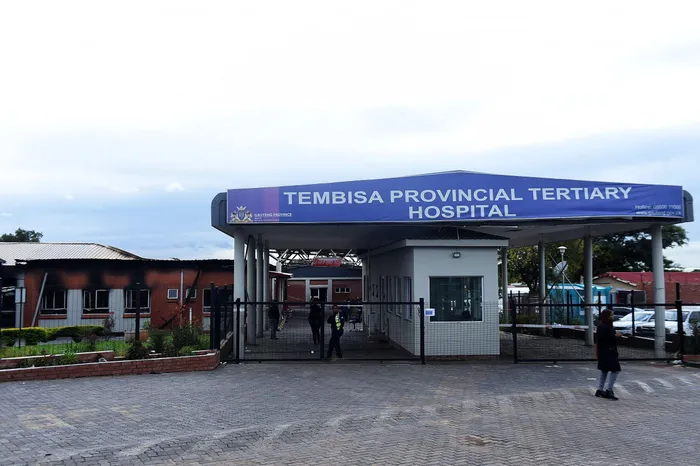
The Gauteng Department says it is trying to recover over R4 million that is owed to it by patients as it faces deep financial challenges.
Image: Itumeleng English / Independent Newspapers
The Gauteng Department of Health is stepping up efforts to recover billions owed in unpaid patient fees, as financial pressure mounts on the province’s already stretched public healthcare system.
New figures show outstanding patient debt has climbed to about R4.6 billion, prompting authorities to tighten billing systems, deploy debt collectors and enforce upfront payment rules for those who do not qualify for free care.
The department on Sunday said it is intensifying revenue collection as part of a broader push to stabilise its finances and protect service delivery.
“The Gauteng Department of Health has intensified efforts to strengthen revenue collection and improve financial sustainability as part of a broader strategy to recover outstanding patient fees, which currently stand at approximately R4.6 billion as recently presented to the Portfolio Committee,” spokesperson Kealeboga Mohajane said.
A significant share of the debt, roughly R2.4 billion, is owed by self-paying patients, including both South Africans and foreign nationals. The remainder is linked to unpaid claims involving state entities and medical schemes.
To recover the money, the department has brought in external debt collectors through a National Treasury-managed contract. Since June 2025, five debt collection agencies have been appointed, recovering about R28.8 million so far.
Officials say the strategy is focused on debt that is both traceable and legally enforceable, while also fixing internal weaknesses that have allowed arrears to build up.
“Recovery efforts are being driven through a targeted and structured approach focusing on debt categories that are both traceable and legally enforceable, while strengthening internal systems to improve billing accuracy and revenue performance,” she said.
The department is also pursuing payments from government-linked entities such as the Road Accident Fund, SAPS, Correctional Services and other provinces, where intergovernmental debt has accumulated over time.
Another key focus area is medical aid billing, which has historically been plagued by administrative inefficiencies. The department says it is tightening controls and improving claims processes to reduce delays and disputes with medical schemes.
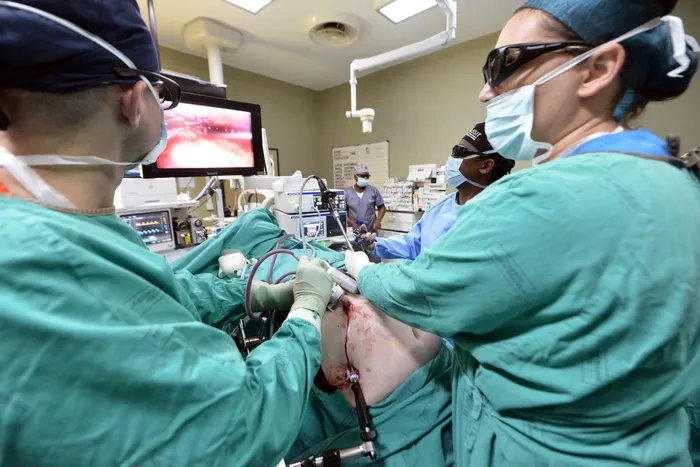
Doctors perform surgery on a patient at the Dr George Mukhari Academic Hospital in Ga-Rankuwa, Pretoria. The Department of Health in Gauteng says it is owed over R4 million by patients.
Image: Bongani Shilubane/African News Agency (ANA)
“Targeted interventions have also been introduced to strengthen medical aid claims management. This includes tightening billing controls, improving claims submission processes and addressing longstanding administrative gaps that have historically resulted in delayed or disputed payments by medical schemes,” Mohajane said.
At the same time, authorities are upgrading patient administration systems to ensure more accurate classification and billing.
As part of efforts to stop new debt from piling up, the department is enforcing upfront payment protocols for patients who are not eligible for free public healthcare. It is also improving patient identification and verification systems, including integrating with national databases to better track individuals and recover outstanding fees over time.
“These measures will ensure that all patients who are liable for payment are correctly billed for services rendered,” the department said.
Despite the push, officials acknowledge significant obstacles, particularly in recovering debt from undocumented or untraceable foreign nationals.
“Recovering debt owed by self-paying patients presents challenges, particularly for undocumented or untraceable foreign nationals,” the department said, adding that it is exploring bilateral solutions where possible.
The recovery drive comes against the backdrop of ongoing financial strain in South Africa’s public health system, where provincial departments carry the bulk of service delivery costs while grappling with rising demand, medico-legal claims and budget constraints.
Gauteng, the country’s economic hub, faces especially high patient volumes, including cross-border healthcare demand, which has added pressure to its already stretched resources.
Officials say the latest measures are not only about recovering lost revenue but about safeguarding the long-term sustainability of healthcare services.
“The department remains focused on strengthening internal systems, improving efficiency and maximising revenue collection within its legislative and operational mandate. The department reiterates its commitment to responsible financial management, service delivery and continuous system improvement to ensure the sustainability of healthcare services in the province,” Mohajane said.
karabo.ngoepe@inl.co.za