

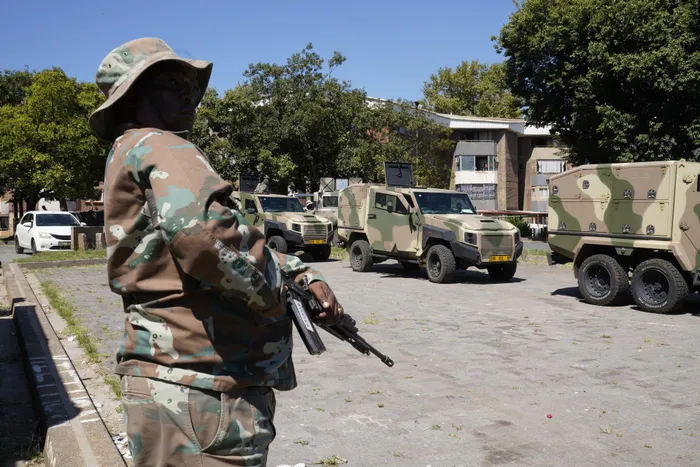
The chairperson of the Portfolio Committee on Defence and Military Veterans, Dakota Legoete, has urged troops deployed in five provinces to work hard to restore peace and stability as crime and illegal mining continue to rise.
Image: Timothy Bernard / Independent Newspapers
Chairperson of the Portfolio Committee on Defence and Military Veterans, Dakota Legoete, has expressed concern that the country is “under threat” and called on all the troops deployed across five provinces to work hard to restore peace and stability as crime and illegal mining continue to rise.
During a joint security cluster media briefing in Parliament on Thursday, Legoete warned that the country faces a serious national security threat.
He said South Africa must recognize that peace is not guaranteed.
“For the first time since the Second World War, global geopolitics have shifted significantly, centered on peace and stability,” Legoete said.
“As a nation, we must prepare for any eventual threat to our sovereignty, our people, and our republic.”
He described crime levels as having reached a crisis point, arguing that criminal activity is undermining the authority of the state.
“More than 26,000 South Africans die each year at the hands of criminals,” he said.
“That translates to about 80 people a day. These numbers rival those in war-torn regions.”
Legoete stressed the need to prioritize victims over perpetrators.
“We often focus on the rights of criminals and the convicted, but forget that 26,000 people have lost their lives. This is a serious concern,” he said.
He added that intelligence reports have identified criminal networks, but emphasized the need for collective action.
“We must act as patriots. This is about national interest, not party politics,” he said.
Legoete also raised concerns about the long-term impact of crime and illicit substances on younger generations.
“If we do not act, we may end up building more rehabilitation centers than universities, as an entire generation faces being lost to crime,” he said.
He reaffirmed the committee’s support for President Cyril Ramaphosa’s decision to deploy 200 members of the South African National Defence Force (SANDF) to assist the South African Police Service (SAPS).
The deployment, which began March 1, 2026, will run until March 31, 2027, at an estimated cost of more than R823 million.
Troops will support operations targeting illegal mining and gang activity in the Eastern Cape, Free State, Gauteng, North West and Western Cape.
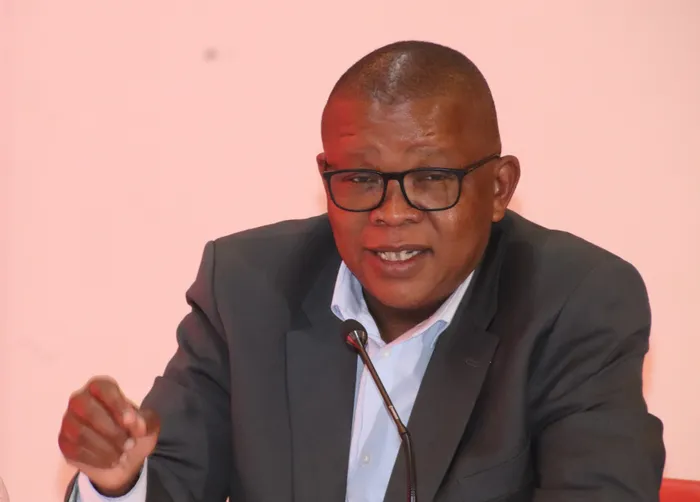
The chairperson of the defence committee, Dakota Legoete, says troops must do more to bring stability to areas affected by crime and illegal mining.
Image: Picture / Jonisayi Maromo
Legoete argued that the scale of violence justifies military involvement.
“When 26,000 people die annually, it resembles a low-intensity civil war,” he said.
“This cannot be left to the police alone.”
He said that many criminal groups are heavily armed, often with high-caliber and automatic weapons, and linked this to failures in the regulation of private security companies.
“Some individuals with criminal records are able to obtain security licenses, giving them access to firearms that end up being used in crimes,” he said. He blamed the Private Security Industry Regulatory Authority (PSIRA) for insufficient oversight.
Legoete also highlighted the burden on ordinary citizens, particularly in vulnerable communities.
“Residents in areas like Khayelitsha are forced to pay protection fees to criminals while also paying taxes that fund law enforcement. This double burden is unjust and unsustainable,” he said.
He emphasised that the committee supports the deployment within the legal framework outlined in Section 201 of the Constitution, which grants the president authority to deploy the defense force, subject to parliamentary oversight.
“Our role is to ensure transparency regarding the reasons, locations, personnel, costs and duration of such deployments,” he said.
While backing the intervention, Legoete cautioned against prolonged military involvement.
“We do not want a situation that resembles military rule. This must be a temporary measure,” he said.
He said the committee has consulted experts, including academics, military specialists and economists, to explore long-term solutions.
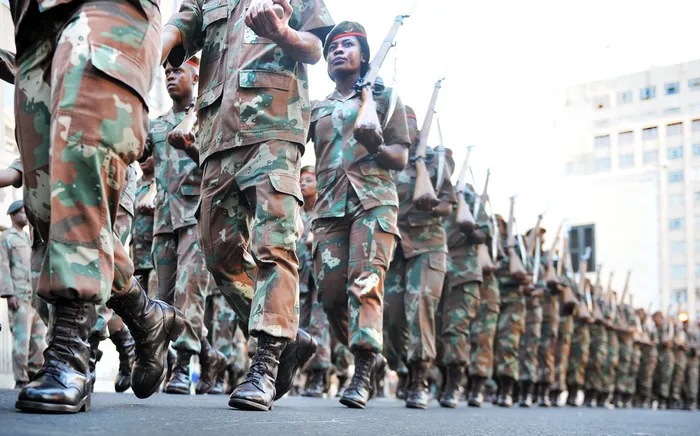
Troops deployed across five provinces have been urged to step up efforts to restore peace, as crime and illegal mining continue to threaten communities.
Image: Phando Jikelo / Independent Newspapers
Among the proposals is the establishment of a centralised intelligence “fusion center” incorporating artificial intelligence and cybersecurity capabilities.
“This center would integrate defense and crime intelligence, allowing for more effective identification and tracking of criminal networks,” he said.
Legoete added that such technology could also protect whistleblowers by enabling anonymous reporting.
“People should be able to report corruption or criminal activity without risking their lives,” he said.
He reiterating the urgency of the situation.
“South Africans are living in fear. Many cannot safely walk the streets after dark. This is not acceptable, and it cannot continue,” he said.
simon.majadibodu@iol.co.za
IOL Politics