

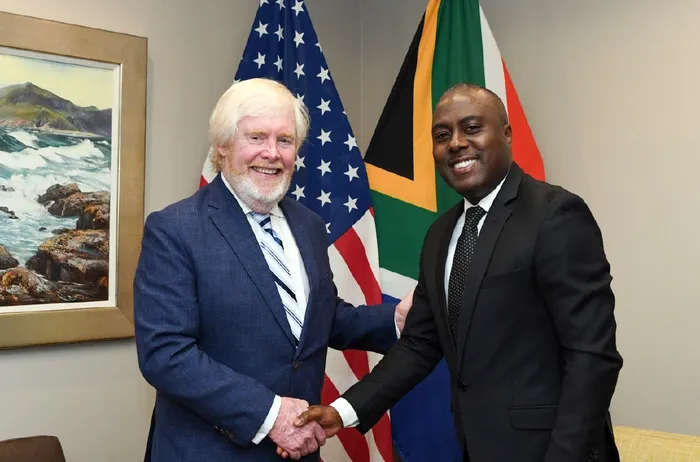
Deputy Director-General (DDG), Clayson Monyela, Acting Chief of State Protocol, receiving copies of Letters of Credence from Brent Bozell III, United States Ambassador to South Africa. When US Ambassador Leo Brent Bozell III dismisses the Constitutional Court's ruling on the chant 'Kill the Boer,' it ignites a deep-seated anger rooted in South Africa's history of oppression and struggle, writes Sipho Singiswa.
Image: DIRCO
When I heard the United States ambassador, Leo Brent Bozell III, say that he “does not care” what the Constitutional Court of South Africa has ruled about the liberation chant "Kill the Boer", a familiar anger rose inside me. I recognised the tone immediately. Black South Africans have heard it before. It carries the voice of an outsider who believes he understands our past better than the people who lived through it. It is the language whiteness imposes on us darkies daily in this settler country.
I am sixty-six years old. I grew up in Gugulethu in Cape Town. In 1976 I joined the uprising that spread through our townships when Black schoolchildren and young people confronted the apartheid state. We knew exactly what we were fighting. The security forces and police patrolled our communities. Pass laws controlled our movement. The land beneath our feet had already been taken from our people long before we were born.
The state answered with brute force.
Police and security forces hunted schoolchildren through the streets with live ammunition. Shotguns were fired at close range, packed with metal bearings and pellets. Young people were beaten, dragged into police vans and thrown into prison cells. Classrooms turned into battlegrounds. Streets filled with smoke, sirens and running feet. The message from the apartheid state was simple: obedience or death.
I passed through Cape Town’s prisons and interrogation rooms. I was tortured there until I came close to death. Some comrades never returned home. Some, like me, disappeared into the machinery of detention. Others came out scarred but still determined to fight.
That experience still breathes inside me, so when I hear a foreign diplomat speak about the language of the struggle against our oppression in repugnant terms, I see red.
Liberation songs are not white folk literature. They came out of the Black struggle against apartheid. They were sung at funerals when families buried children killed by the state. They were sung at rallies and political gatherings. They were sung in small township houses where activists met despite the risk of arrest. They were sung in mass unison when facing off white men with guns. These songs grew out of communities that faced daily terror, forced removals and possible death.
Their meaning belongs to that history.
We Black South Africans debate the meaning of struggle songs among ourselves. We discuss them in political organisations, universities and communities. Those discussions form part of our own political life.
So when a foreign envoy stands in this country and declares that he does not care what the Constitutional Court has ruled, he shows contempt for the institutions of the country that host him. But mostly he shows his contempt for my people.
The Department of International Relations and Cooperation (DIRCO) responded through diplomatic protocol and summoned the ambassador for a formal démarche under the authority of Ronald Lamola. Diplomacy demands restraint.
Personally, I believe the conduct justified expulsion.
The ambassador has also repeated the claim that South Africa faces “white genocide”. That claim circulates widely in American political discourse and among right-wing lobby groups. Its purpose is clear. It attempts to erase the historical record of dispossession in South Africa and to present the descendants of settler privilege as victims.
There is no white genocide in South Africa.
What exists is the long shadow of land seizure and an unfinished struggle over ownership, power and justice. It is a slow genociding of our desperately poor majority.
Liberation theory teaches us to read power where it hides inside language. The story of settler “genocide” removes the record of settler theft and domination from the picture. It replaces that history with a narrative designed to weaken the demands of the Black majority. It also prepares the ground for outside pressure and interference.
Across the Global South we recognise this pattern. Narratives about persecution travel through media networks and diplomatic channels. They build the ideological space for regime-change politics.
We darkies recognise that script.
The real violence in this country ran, and continues to run, in the opposite direction. European settlement pushed African communities from their land. Colonial administrations then transformed that displacement into a system of control.
The Glen Grey Act introduced mechanisms of labour and tax control and territorial restriction during the colonial period. The Natives Land Act later entrenched racial land ownership across the country. Apartheid extended that framework through forced removals, racial zoning and a bureaucracy designed to control where Black people could live.
Through these processes the theft of our land became formal law.
The end of apartheid may have altered the political order, yet the scarred geography created by centuries of dispossession remains visible everywhere in South Africa.
That is why the land question continues to shape the country’s politics.
Black South Africans also continue lamenting how this inheritance has never been addressed.
Many, as I do, believe the Constitution must be rewritten so that it reflects the material rights of the Black majority, particularly regarding land. That debate belongs to Black political life in this country. It belongs to the people who carried the liberation struggle and who still live with the consequences of dispossession.
Foreign diplomats do not decide those questions. Neither do we require their permission to express our ontological wounding through our struggle songs.
Another element of the present situation involves discussion of Western Cape secession.
I grew up in Cape Town. Gugulethu, Nyanga and Langa shaped the political environment of my youth. These communities lived before and beyond the 1976 era of uprising, through forced removals, police raids and constant repression during apartheid.
That history lives inside the sprawling townships and ghettos around the pristine city.
When foreign officials repeat propaganda about white genocide while showing interest in Western Cape secession, the political intention becomes clear. Across the Global South outside powers have used internal divisions to advance their own strategic interests.
But let me say out loud, Cape Town will not become a foreign-backed enclave. We will not allow it.
The Western Cape will not become an American or Israeli-aligned outpost separated from the rest of South Africa. The millions of Black and coloured working people who live in its townships and working-class communities would never accept such a project.
Gugulethu is not leaving South Africa. Nyanga is not leaving South Africa. Langa is not leaving South Africa.
Cape Town belongs to the country whose people fought for it.
We revolutionaries understand the language of liberation because we lived it. We also understand the language of empire because we resisted it. And we will continue it.
We know that the propaganda about white genocide attempts to erase history and that the flirtation with secession exposes a dangerous political project aimed at our erasure. The pressure directed at South Africa’s political institutions forms part of this familiar strategy of colour revolution politics aimed at countries that refuse to follow Washington’s line.
South Africa fought too long for its as yet, unclaimed sovereignty. We will continue that fight.
Black South Africans will eventually rise up beyond debating the meaning of the struggle, the rewriting of the Constitution and the future of the land. They will reach breaking point. We will not allow you to turn our country into a Gaza genocide from a separate Western Cape controlled by US and Israeli diktats. Don't fool yourself, Ambassador. One day you will hear the sound of our people chanting "Phuma, Satany, Phuma Bozell, Hai... Hai Hai, Kill the Boer, the white settler." Our sense of revolutionary rhythm will scare you more than the constitutionally legal words we will chant at you.
Perhaps you should consider a self-démarche before you are chased back to the redneck swamp from which you emerged.
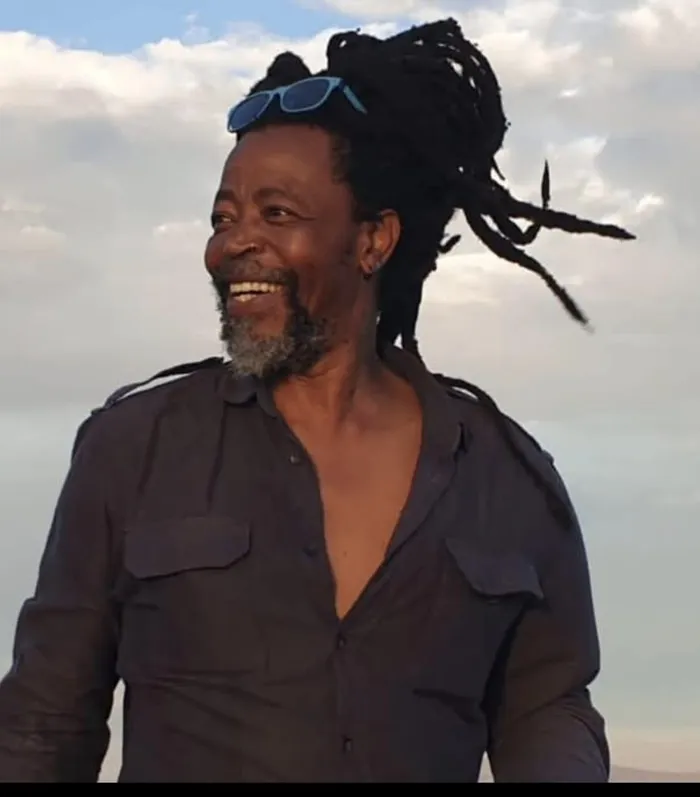
When US Ambassador Leo Brent Bozell III dismisses the Constitutional Court's ruling on the chant 'Kill the Boer,' it ignites a deep-seated anger rooted in South Africa's history of oppression and struggle.
Image: Supplied
* Sipho Singiswa was a student leader in the 1976 uprisings. He grew up in Gugulethu after his family was forcibly removed from Milnerton. He was arrested at age 15 and disappeared into the aparthed prison systems where he underwent torture and solitary confinement for two years. Thereafter, he was sentenced to 5 years on Robben Island. He has remained in the struggle for Justice as a documentary filmmaker, writer, and activist.
** The views expressed do not necessarily reflect the views of IOL or Independent Media.