

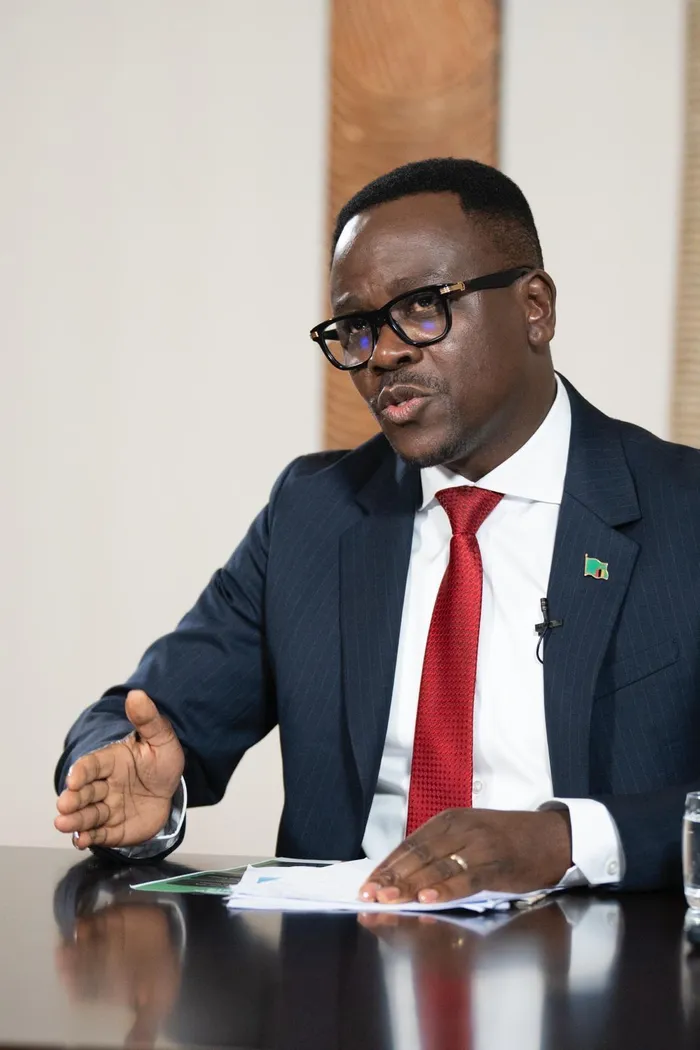
Willah Mudolo is emerging as a central figure.
Image: Supplied
Calls for mediation in the long-running dispute over the remains of former Zambian president Edgar Lungu have intensified, with Willah Mudolo emerging as a central figure.
Mudolo, who became president of Zambia’s Patriotic Front after other candidates fell from the race, is now being proposed as an official mediator between the Zambian government and Lungu’s family. The NGO Right to Justice argues that his political standing and presence in South Africa place him in a strong position to help resolve the impasse.
The mediation call comes as the legal battle over Lungu’s burial continues in South Africa, more than ten months after his death. The matter returned to the Pretoria High Court on Thursday, where both parties reached a temporary agreement aimed at easing tensions while awaiting further legal processes.
In terms of the agreement, which was made an order of the court, Lungu’s body will be placed under the care of AVBOB Pretoria East. The Zambian government has undertaken to cover the costs associated with the storage of the remains until the dispute is resolved.
The decision follows a period of confusion and legal urgency after the former president’s body was reportedly removed from a private mortuary without the consent of his family. Before this, Lungu’s remains had been kept at Two Mountains Mortuary. The family later alleged that police had taken custody of the body in violation of an existing court order.
This prompted an urgent legal application, resulting in a late-night court ruling directing the South African Police Service to return the remains to Two Mountains or another private mortuary in Pretoria. The incident intensified tensions and brought renewed scrutiny to the handling of the case.
At the heart of the dispute is a disagreement over where Lungu should be buried. The Zambian government maintains that, as a former head of state, he should be repatriated and laid to rest in Zambia with full honours. In contrast, his family insists that he expressed a wish to be buried in South Africa, where he died.
The matter has since escalated to the Supreme Court of Appeal, where Lungu’s family is challenging an earlier ruling that ordered the return of his remains to Zambia. The appeal is currently pending, effectively delaying final burial arrangements.
Presiding over Thursday’s proceedings, Judge Petrus van Niekerk welcomed the agreement between the parties, noting that prolonged litigation would not serve their interests while the appeal is underway. His remarks underscored the importance of maintaining stability during the legal process.
Meanwhile, Right to Justice has continued to advocate for a mediated resolution. The organisation believes that Mudolo’s involvement could help bridge the divide and prevent further escalation. According to the group, Zambia has struggled to manage the situation in a manner that reflects both respect and unity.
Right to Justice chairperson Siphesihle Jele criticised the handling of the matter, describing it as damaging to Zambia’s image. “The eyes of the world are on Zambia and how they have treated one of their fathers,” Jele said. “It is painful and an insult to the legacy of those who fought for freedom.”
Jele further placed the dispute within a broader historical context, referencing leaders such as Oliver Tambo, Robert Mugabe, Seretse Khama, and Kenneth Kaunda. He argued that the ongoing standoff risks undermining the dignity associated with the region’s liberation-era leadership. Right to Justice has now enrolled as a friend of the court in a bid to ensure that Mudolo is made the official and final mediator of Lungu’s mortal remains.
Legal experts note that disputes involving the remains of prominent figures often present complex challenges, particularly when they involve cross-border legal systems.
Questions have also been raised about the alleged removal of the body by police and whether proper legal procedures were followed.
More than ten months after his death, Edgar Lungu remains unburied, his final resting place uncertain.