

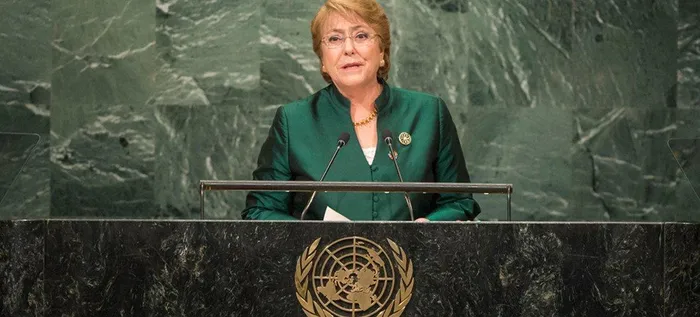
Michelle Bachelet from Chile
Image: UN NEWS
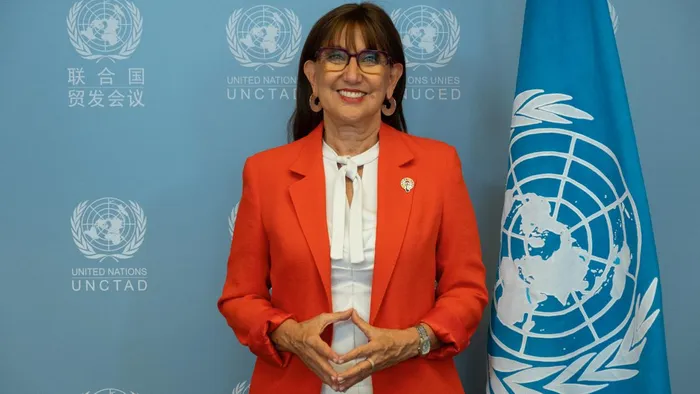
Rebeca Grynspan from Costa Rica.
Image: United Nations
Four candidates for the position of United Nations Secretary-General will participate in interactive dialogues with member states and civil society starting April 21 as efforts to select the organisation’s first female leader ramp up.
This crucial selection process aims to appoint the UN's first female Secretary-General to succeed Antonio Guterres on December 31, a development that some believe is long overdue.
The candidates—Michelle Bachelet from Chile, Rafael Grossi from Argentina, Rebeca Grynspan from Costa Rica, and Macky Sall from Senegal—bring a wealth of experience and global perspective to the table.
The selection process occurs amid criticism regarding the UN’s effectiveness and the Security Council's composition.
Former South African Ambassador Mathu Joyini and General Assembly President Annalena Baerbock have emphasised the need for a leader with both administrative and diplomatic "general" skills to navigate current geopolitical disruptions. While the General Assembly appoints the Secretary-General, the process remains heavily influenced by Security Council recommendations and P5 veto power.
The selection process is expected to conclude in late 2026.
President of UN General Assembly Annalena Baerbock said, “This next Secretary-General should provide strong and dedicated, effective leadership skills with experience in governance structures, but also with regard to the United Nations, with regard to management skills of this institution in the light of the reforms.
''And then, it also has the strong call with regard to regional diversity, and this call is in consensus by 193 member states to strongly call on member states for the nomination of women.”
Mathu added that "we made a call, and member states wanted in that resolution for countries to nominate female candidates. And we started with using the language deploring and the left deploring the fact that there has never been is a female Secretary-General.
''Of course, the negotiations were tough, and we had to move from deploring to strongly encouraging member states to nominate female candidates. And I think a majority really would like to see us move in that direction.”