

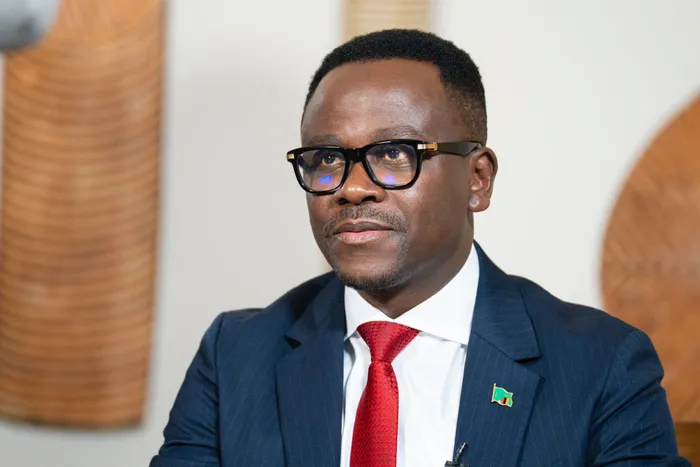
Willah Joseph Mudolo, a South African-based businessman and opposition Patriotic Front (PF) candidate.
Image: Supplied
Willah Joseph Mudolo, a South African-based businessman and opposition Patriotic Front (PF) candidate, is emerging as the front runner for Zambia’s 2026 presidential election, gaining national recognition for his involvement in resolving the prolonged dispute over the remains of former President Edgar Chagwa Lungu.
Lungu’s death in South Africa sparked months of legal and diplomatic wrangling, leaving his body stranded abroad and fueling tensions within Zambia. Mudolo positioned himself as a principled mediator, calling for a lawful and dignified resolution that respected both Lungu’s family and the nation.
Observers say this stance enhanced his public profile, portraying him as a unifying figure capable of navigating sensitive national issues with legal and moral clarity.
Mudolo’s rise within the PF comes amid deep party fractures and leadership disputes. He has distinguished himself by insisting on adherence to party rules and constitutional processes. In recent weeks, he rejected a party gathering described by some factions as a legitimate convention because it violated a court injunction, warning members that participation in irregular meetings could jeopardize their membership.
Supporters argue that his principled stance positions him as a reformer who could restore unity and credibility to a party long plagued by internal conflict.
Mudolo’s growing support is also fuelled by his emphasis on lawful and transparent leadership. Many party members and citizens who are frustrated with factionalism see him as a principled alternative to traditional political maneuvering.
Zambia faces a range of economic, social, and governance challenges as it approaches the 2026 elections. The country has been grappling with high public debt, inflation, and a fluctuating currency, which have strained household incomes and limited access to essential services. Unemployment, particularly among youth, remains a persistent concern, while rural communities continue to struggle with inadequate infrastructure and limited access to quality healthcare and education.
Politically, internal divisions within major parties, coupled with public distrust in institutions, have compounded governance challenges, making it difficult to implement consistent policies.