


Twenty fake doctors have been arrested in South Africa, including one in Midrand who practised for a staggering 10 years before being caught.
Image: File
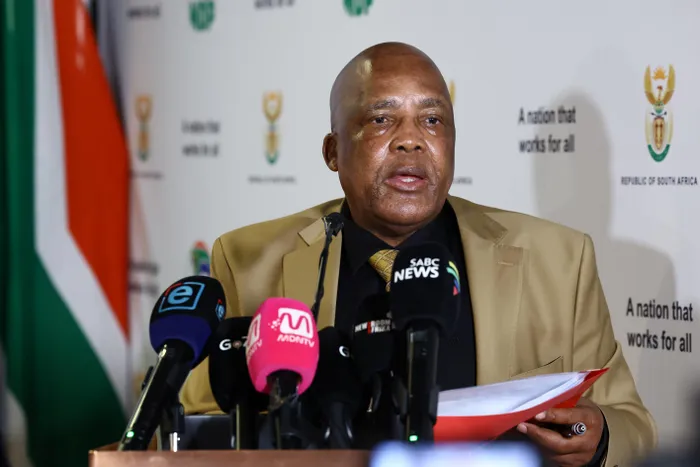
Health Minister Dr Aaron Motsoaledi confirms 20 bogus practitioners were arrested in 2025/2026, including a Midrand doctor practising illegally for 10 years, following joint operations with HPCSA and SAPS.
Image: GCIS
Dr. Aaron Motsoaledi, the health minister, says that 20 fake doctors were arrested in the 2025/2026 financial year for practicing medicine without a license. One of them was a fake doctor in Midrand who worked for 10 years before being caught after someone in the community reported him.
This comes after African Transformation Movement (ATM) Member of Parliament (MP) Thandiswa Marawu asked Motsoaledi how the Department of Health failed to detect the bogus doctor arrested in Midrand on January 28 2026, who allegedly practised illegally for 10 years, and what support was available to affected patients.
She also asked what measures were in place to verify doctors’ credentials, whether inspections would be conducted at private medical centres, and how many bogus doctors had been caught, along with the consequences they faced.
In response to the parliamentary question, Motsoaledi said the bogus Midrand practitioner was not picked up earlier because he was not registered with the Health Professions Council of South Africa (HPCSA), and therefore did not appear on its practitioners register.
“The bogus practitioner in Midrand was not detected earlier because he was not registered with the HPCSA, and therefore did not appear in the HPCSA's practitioners register. In such circumstances the HPCSA depends on reports from the community,” he said.
Motsoaledi said the HPCSA received a tip-off from a member of the public, after which its Inspectorate Division verified the allegation.
“A joint operation was then coordinated with the South African Police Service (SAPS) to inspect the practice. This operation led to the arrest of the bogus practitioner,” he said.
He said no person was allowed to practise as a medical practitioner without registration with the HPCSA, which has the mandate to investigate whether practitioners in practice are properly registered.
Motsoaledi added that no officials from the National Department of Health were involved in allowing unqualified people to practise.
On recourse for patients who may have received treatment from the bogus practitioner, Motsoaledi said the HPCSA could not take disciplinary action against people falsely presenting themselves as doctors because its jurisdiction applied only to registered practitioners.
“The HPCSA cannot initiate disciplinary action against individuals presenting themselves as doctors without proper registration, as its jurisdiction applies only to registered practitioners,” he said.
He said practising without valid registration was a criminal offence and should be dealt with through the criminal justice system.
Motsoaledi said affected patients could report the matter to the SAPS for criminal investigation and could also pursue civil claims for damages through the courts.
“Patients are further encouraged to report such matters to the Department of Health in order to receive appropriate assistance and access to the necessary care,” he said.
He said the HPCSA and its professional boards had put in place “a comprehensive regulatory framework” governing the education, training and registration of health professionals, and that every practitioner was required to comply with the relevant prescripts before practising.
Motsoaledi said suspected cases of unregistered or fraudulent practitioners were referred to the SAPS for investigation and prosecution.
He acknowledged that identifying bogus practitioners remained difficult because of limited resources and capacity, and because some operated as organised syndicates.
“Identifying bogus practitioners is challenging due to limited resources and capacity, as they operate nationwide and, in some cases, as organized syndicates,” he said.
He said the HPCSA was working with law enforcement agencies and other regulatory bodies to clamp down on illegal practitioners and was also launching awareness campaigns to help the public identify and report them.
Motsoaledi said warning signs could include practices that only accepted cash payments, because medical schemes would not process payments to unregistered persons, a mismatch between the name of the practice and the person offering services, and the absence of an HPCSA registration certificate displayed at the premises.
He added that the HPCSA was engaging stakeholders to implement “an integrated approach” to the issue, including the verification of registration by employers before appointments.
Motsoaledi said 49 bogus practitioners were arrested and presented in court in the 2024/2025 financial year.
He said 3,528 inspections were conducted, 651 complaints regarding bogus practitioners were investigated, and 28 joint operations were carried out during that period.
For the current 2025/2026 financial year, he said over 6,984 inspections had been conducted, 565 complaints had been investigated, and 31 joint operations had been carried out.
Motsoaledi said 20 bogus practitioners had been arrested in the current financial year and that “the individuals arrested by the SAPS appeared before the court.”
hope.ntanzi@iol.co.za
IOL News
Twenty fake doctors have been arrested in South Africa, including one in Midrand who practised for a staggering 10 years before being caught.
Image: File