
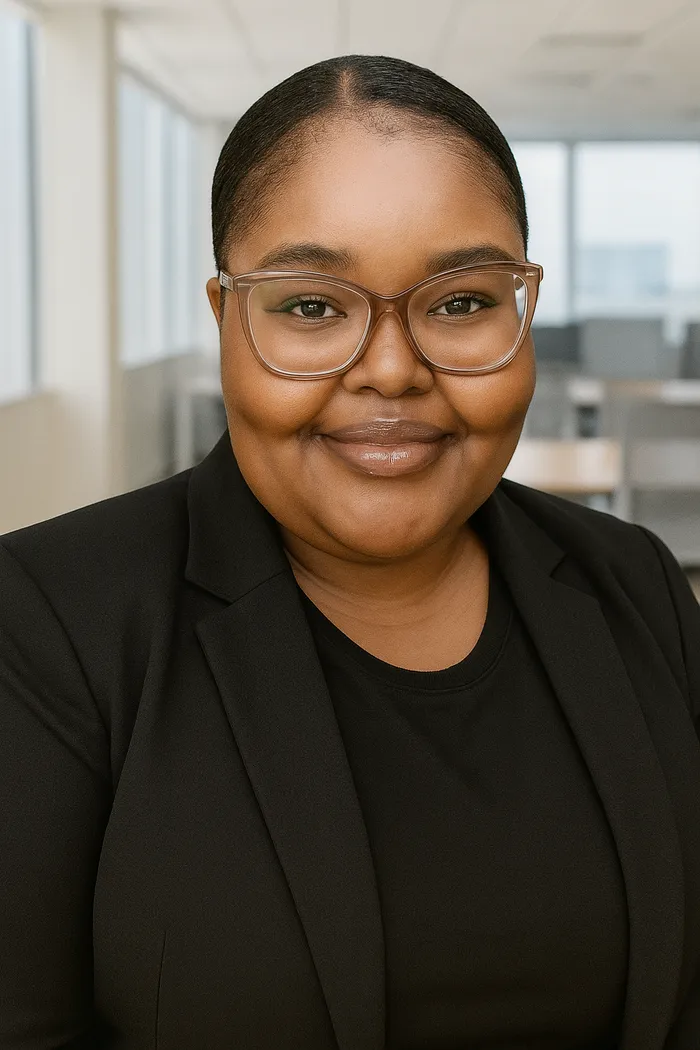
Dr Lerato Nkosi
Image: Supplied
Finance Minister Enoch Godongwana tabled the 2026 Budget Speech, revealing several significant measures aimed at addressing the economic pressures facing South Africans. While many of the announcements aligned with previous plans in the State of the Nation Address (SONA), one of the most discussed points was the future of social grants, specifically the Social Relief of Distress (SRD) grant, which is set to be discontinued by 2028.
The announcement has sparked mixed reactions, with Dr. Lerato Nkosi, an economist and senior lecturer at the University of South Africa, offering a critical analysis of the proposed measures and presenting alternative solutions to tackle South Africa’s social welfare challenges. According Dr. Nkosi, the budget, while introducing certain positive changes, also presents an opportunity to rethink how South Africa addresses social safety nets.
"The budget has been met with much relief and renewed hope," said Nkosi, "as the Minister announced that there will be no increase in personal income tax this year amid a more positive growth projection of 2%. This is a welcome relief, especially in light of the strained economic conditions most South Africans face. Additionally, the increases in all social grants, except the SRD, bring some hope to those who rely on state assistance."
However, the SRD grant, a lifeline for many vulnerable South Africans, was notably absent from the increases. Instead, the government has announced its discontinuation by 2028, which aligns with previous announcements from the National Treasury. According to Nkosi, this move reflects the government's broader policy shift. "The Minister also announced that the SRD grant will be discontinued from 2028. This reflects a firm policy stance, as it was also announced by the National Treasury at the 2025 Medium Term Budget Policy Statement (MTBPS) that it will end in 2026/2027," she noted.
While the move is seen as part of the government's ongoing fiscal strategy, Nkosi acknowledges the sensitivity of the decision, especially in an election year. She argues that it is important to balance the state's role in providing assistance with the need for long-term economic sustainability. "The state indeed cannot provide a social safety net for one’s entire lifetime," she argued. "Namely, the Child Social Grant (CSG) when one is born, an SRD when they no longer qualify for a CSG, and an Old Age Grant once they become pensioners."
Nkosi proposes a shift in policy towards empowerment rather than long-term dependence. She advocates for a graduation model that would help grant recipients transition out of the social welfare system into economic self-sufficiency. "The state could rather create a programme that enforces and encourages grant recipients to leave the SASSA system," she explained.
To assist grant recipients in making this transition, Nkosi proposes a two-pronged approach: first, by empowering those with matric certificates through TVET college and university support from the Department of Higher Education and Training (DHET). This educational support would enable individuals to graduate and gain the skills needed to enter the workforce.
Second, Dr. Nkosi suggests that the government create a national programme to absorb these graduates into various government departments, state-owned enterprises (SOEs), and government agencies based on their qualifications. "Upon graduation, there could be a national programme established to absorb the graduates and place them in various government departments, state-owned enterprises (SOEs) and government agencies according to their qualifications," she said.
This, according to Nkosi, would allow the state to provide essential services to its citizens without maintaining long-term reliance on grants. She added that by following this approach, "the state will slowly assist grant recipients to exit the system while giving an incredible relief to the fiscus."
Nkosi's suggestions reflect a broader conversation about the need for sustainable economic growth in South Africa. While the 2026 Budget introduced positive changes, Nkosi is clear that the broader issue of grant dependency needs to be addressed through empowerment policies that give citizens the tools to succeed in the economy.
"This approach would help reduce the fiscal burden of social assistance while creating opportunities for young South Africans to contribute meaningfully to society," she concluded.
By focusing on education, job creation, and graduation from the welfare system, Dr. Nkosi’s solution offers a pathway to long-term economic stability while also reducing the strain on government finances. With careful implementation of such strategies, South Africa may be able to break the cycle of dependency and pave the way for a more resilient and self-sufficient economy.
Godongwana said: "One of the critical priorities in this Budget is the phased transition away from the Social Relief of Distress (SRD) grant by 2028. We believe that our approach must balance short-term relief with long-term empowerment. The government will now focus on creating sustainable pathways for individuals to move away from welfare dependency and enter the workforce."
"We are committed to strengthening education and skills development. The introduction of targeted programmes aimed at empowering young South Africans will pave the way for their integration into the economy, not just as recipients of grants but as contributors to national growth."
Godongwana also provided updates on the government’s efforts to reduce wasteful spending within the public sector. The National Treasury has identified over R12 billion in savings to be achieved over the medium term, which will be redirected into economic development initiatives. The government has been implementing a public sector rejuvenation programme as part of this effort, which focuses on reducing the wage bill and encouraging early retirements.