That ID looks real – but is it? A fraud expert’s guide to spotting the fakes that FICA checks miss
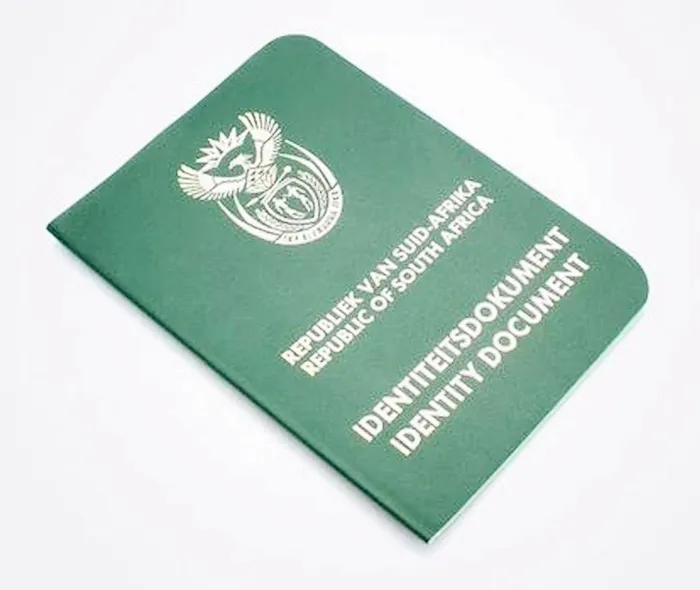
Criminal syndicates are manufacturing identity documents that can pass visual inspection by even the most diligent compliance officers.
Image: Supplied
Identity fraud in South Africa has surged by an alarming 400% in 2024, according to figures from the Southern African Fraud Prevention Service (SAFPS).
The resultant forgeries can fool almost anyone, but experts look for the small things to derail money launderers: The letter “D” for instance, can be the key to stopping a fraudster and ensuring FICA compliance that could’ve cost millions in fines.
For lawyers, estate agents, and financial advisors, the massive scale of identity fraud represents a direct threat to the gatekeeping role they play in the economy. Every property transfer, trust account deposit, or high-value purchase begins with a simple act: handing over an ID document, after all.
When it comes to IDs, accountable institutions make copies, certify them, and file them away as required. But criminal syndicates are manufacturing identity documents that can pass visual inspection by even the most diligent compliance officers.
During a recent nCino webinar, a room full of professionals was challenged to spot the flaws in a fraudulent green ID book. The result? Almost no one out of hundreds could. The document looked perfect. It felt right. But to a trained eye, it presented verifiable flaws.
The secret tells of a forged ID
Kevin Hogan, a fraud risk expert at Investec, frequently presents at nCino events to empower accountable institutions to better fight money laundering and fraud. At a recent nCino webinar, Hogan said that the most convincing fakes often fail on the tiniest historical details – minutiae that syndicates frequently miss, or simply cannot replicate consistently.
If your front-line employees are manually checking the still very prevalent green ID books, here are three forensic "tells" that are nearly invisible unless you know exactly where to look:
- The 1999–2002 barcode anomaly
Between 1999 and 2002, the Department of Home Affairs had a specific printing alignment on the green ID book’s barcode. For IDs issued during this window, the last digit of the barcode number sits directly on top of the barcode bars.
However, for any ID issued outside of this specific three-year period, that last digit should hang slightly over the edge of the barcode. Fraudsters, however, often use a single template for all their forgeries. If you see an ID issued in 1996 where the last digit sits neatly on top of the barcode, you are holding a fake.
- The marriage of the 'D' and the Coat of Arms
The font used in the green ID book changed over the decades. Specifically, the font of the letter "D" in the phrase "ID Number" is intrinsically linked to the version of the Coat of Arms printed on the document.
Older ID books use a serif font where the "D" has small lines (serifs) sticking out. This must be paired with the old South African Coat of Arms. Newer books use a sans-serif, bolder "D" paired with the new Coat of Arms. Criminals often mix and match these elements, pasting a new Coat of Arms onto a template with the old font. If the "D" doesn't match the era of the Coat of Arms, the document is fraudulent.
- The digital halo
Modern forgeries are often digital composites printed onto physical booklets. A common giveaway is the background of the barcode. On a genuine ID, the background noise and colour consistency are uniform. On a fake, the barcode is often pasted from a digital file with a pure white background, which contrasts subtly with the slightly off-white or textured background of the page itself.
The risk of relying on the naked eye
While these tips provide a layer of defence, relying on manual verification is becoming a dangerous gamble.
"Fraudulent documents in South Africa are typically manufactured in clandestine operations in residential properties, internet cafés, and printing shops," explains Hawken McEwan, Director of Risk & Compliance at nCino KYC Africa. "But don’t let this fool you. These operations are often run by organised counterfeit syndicates. Professional counterfeiters are sophisticated, and the quality of their documents shouldn’t be underestimated."
The reality is that expecting employees to catch these discrepancies is an unfair burden. "To have comprehensive manual verification would require extensive knowledge around printing errors, font variations and coat of arms versions – all of which change over time," says McEwan. "We would essentially be asking every receptionist, paralegal, financial advisor and estate agent to be a forensic document examiner. That's not realistic, and criminals know it."
Moving from "Is this ID real?" to "Is this person real?"
If manual checks are porous, the only robust defence lies in removing the reliance on human visual inspection entirely. This is where the shift from document collection to biometric verification becomes critical.
Automated solutions that triangulate a live selfie against the Department of Home Affairs (DHA) database and the ID document provided offer a level of certainty that no manual check can match.
"Biometric checks against the golden source of Home Affairs combined with liveness verification cut through this complexity," McEwan notes. "Instead of asking 'is this ID real?', you're asking 'is this person who they claim to be?' It’s even smart enough to know whether it's a human looking at the camera or a photo or deepfake video."
The high cost of a missed fake
For accountable institutions, the consequences of accepting a fake ID extend far beyond a failed audit. It is a pathway to money laundering, where trust accounts and property transactions are used to wash the proceeds of crime and in some cases then being used to fund terrorism.
"When a law firm, estate agent, or other accountable institution accepts a fraudulent ID during client onboarding, they're potentially opening a conduit for criminal activity," warns McEwan.
The Financial Intelligence Centre has shown it is willing to impose administrative sanctions running into the millions for compliance failures. “But the reputational damage of being the firm that facilitated a syndicate's money laundering is often far costlier,” says McEwan.
“With South Africa fresh off the Financial Action Task Force’s (FATF) greylist, the importance of anti-money laundering efforts and rock-solid KYC practices is essential. Our next period of oversight is in 2026 – we can’t rest on our laurels.
THE STAR