Public and analysts warn of another “SONA of lies” following Ramaphosa’s eighth address
Critics say the President has a history of announcing ambitious initiatives that fail to materialise
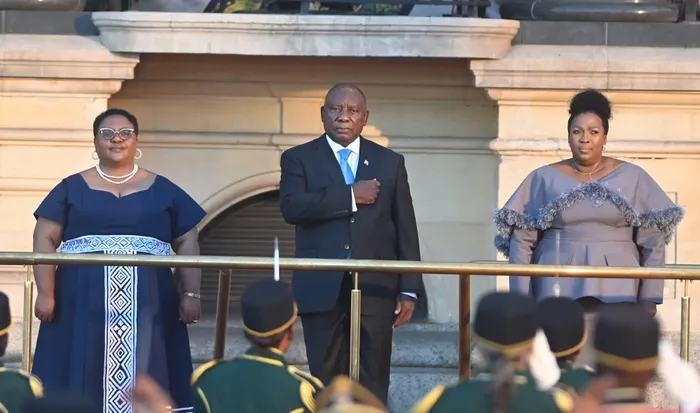
SONA2026 President Cyril Ramaphosa delivered the State of the Nation Address (SONA2026) in cape Town.
Image: Ayanda Ndamane/ Independent Newspapers
President Cyril Ramaphosa presented the 2026 State of the Nation Address (SONA) last week, outlining plans for growth, job creation, and service delivery. However, both members of the public and independent analysts have expressed concern that the address may repeat the pattern of unfulfilled promises seen in past SONAs.
Critics say the President has a history of announcing ambitious initiatives that fail to materialise, leaving citizens frustrated with a gap between rhetoric and delivery. Many fear that the latest SONA may be “more of the same,” with promises that are aspirational rather than actionable.
Major promises still undelivered:
Lanseria Smart City – Planned urban hub with housing and commercial infrastructure remains just an idea.
National Dialogue / Social Compact – Intended to unite government, business, labour, and civil society; dialogue has collapsed
Bullet Trains / High-Speed Rail – Promised high-speed rail network has seen no construction or clear funding.
University in Ekurhuleni – Proposed institution to expand higher education access has not been built, but the department says there are no current plans to build university.
Eskom Full Unbundling – Only the transmission entity exists; generation and distribution remain consolidated.
Port Investment Partnerships – Private-sector deals to upgrade Durban and Ngqura ports have collapsed.
Digital Television Migration – Deadlines for full migration have been repeatedly postponed.
New Water Resource Agency – Announced to coordinate water infrastructure; agency remains non-operational.
Additional Sexual Offence Courts – Less than half of the promised 16 courts are operational.
Crime Reduction Initiatives – National crime rates remain alarmingly high despite repeated promises.
Reducing Bureaucratic Red Tape – Streamlining government processes and approvals has not been fully achieved.
Major Job Creation Programs – Employment targets, particularly for youth, remain unmet.
Economic Growth Targets – Promised GDP growth above 3 % and poverty reduction initiatives have not materialised.
Reduced Cabinet / Smaller Government – Structural reforms to cut ministerial posts have not been implemented, since the GNU the size of cabinet has almost doubled.
For over an hour and a half, the President highlighted economic recovery, crime reduction efforts, infrastructure development, and South Africa’s growing global influence. He celebrated falling inflation, declining debt, eased interest rates, and South Africa’s successful hosting of the G20 — the first on African soil.
Critics argue that it presented a vision of progress that has yet to fully materialise on the ground.
On crime, Ramaphosa announced the deployment of the South African National Defence Force (SANDF) to support police in the Western Cape and Gauteng, alongside a plan to recruit 10,000 additional officers. While these interventions signal urgency, analysts warn they address symptoms rather than root causes such as unemployment, poverty, and under-resourced police stations. “Visible policing alone will not dismantle entrenched crime networks,” one security expert noted.
Water security was another focus. The President promised task teams and R1.3 trillion over three years to fix failing municipal systems. But critics argue that decades of mismanagement cannot be remedied overnight, leaving many South Africans skeptical about immediate relief in drought-affected towns.
Ramaphosa also emphasised anti-corruption measures, including lifestyle audits for senior police officials and municipal managers. Yet, observers caution that enforcement remains inconsistent, and past pledges of similar nature have often stalled in implementation.
Energy reforms under Operation Vulindlela were credited with easing load shedding. Still, Eskom’s structural problems and maintenance backlogs mean that uncertainty persists, challenging the optimistic narrative.
Economically, Ramaphosa highlighted declining inflation, improved investor confidence, and stronger business sentiment. Yet for ordinary South Africans, unemployment, inequality, and rising living costs remain pressing realities, leaving the SONA’s economic optimism distant from daily life.
Amid the criticism, some voices offered a counterpoint. Professor Simphiwe Madikizela of the University of South Africa described the speech as “upbeat, bold and appropriately detailed.” He argued that, particularly in an election year, projecting confidence can help restore investor and public sentiment, which in turn supports growth.
Observers note that megaprojects and governance reforms repeatedly announced in SONAs have shown little progress, and some initiatives remain largely symbolic. Citizens have expressed frustration with persistent service delivery issues, ongoing unemployment, and delayed infrastructure projects.
Analysts warn that while the 2026 SONA included ambitious plans, the risk of exaggerated claims or promises that will not be delivered remains high. Previous SONAs saw deadlines missed and projects stalled, prompting public skepticism
As South Africa continues to face high unemployment, infrastructure challenges, and governance issues, citizens and analysts are urging that promises in the 2026 SONA be accompanied by clear, measurable timelines. Without tangible results, observers warn, the President risks repeating the pattern of announcements that fail to translate into real-world outcomes.
*Find the full responses to the SONA at Thestar.co.za