Leadership in a fragile world: UNISA’s 2026 vision and the value of Higher Education
LenkaBula outlined priorities including advancing research excellence, strengthening regional centers, future-proofing the university through innovation, and ensuring student success
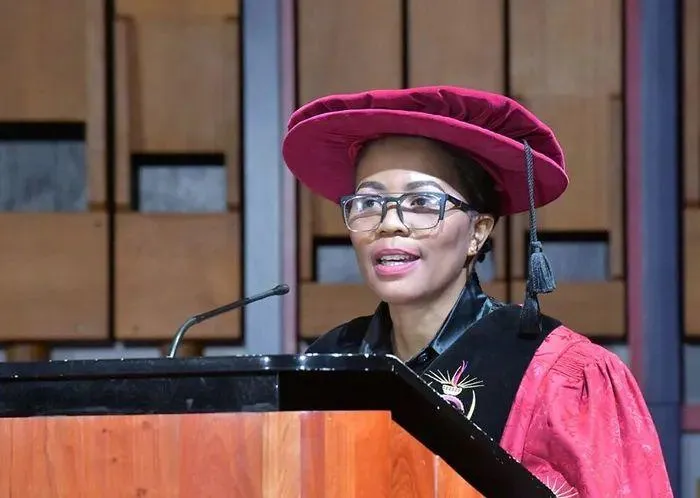
Unisa Principal and Vice Chancellor Professor Puleng LenkaBula
Image: Supplied
The University of South Africa (Unisa) officially opened its 2026 academic year with Vice Chancellor Professor Puleng LenkaBula calling for decisive action, leadership, and global awareness. She began by addressing the fragility of international relations, citing the controversial actions of U.S. President Donald Trump and the capture of Venezuela’s president. “These events remind us just how fragile international relations can be and how quickly global stability can be disrupted,” she said. “Our universities have a duty to equip students to understand global power dynamics, navigate complex geopolitical challenges, and act with wisdom and integrity.” She emphasised that higher education must prepare graduates not only to thrive, but to lead responsibly in a turbulent world.
It was an unusual starting point for an academic calendar address , but seemingly entirely deliberate.
What LenkaBula was signaling is that higher education no longer operates in a vacuum. Universities are not ivory towers insulated from geopolitics; they are embedded in it. When global tensions escalate, currencies fluctuate. When sanctions are imposed, supply chains tighten. When wars erupt, migration patterns shift. When diplomatic alliances fracture, research collaborations and funding streams are affected and students sitting in virtual classrooms in Pretoria, Polokwane or Port Elizabeth are not detached from those dynamics.
This aligns with UNISA’s position as the largest open distance learning institution on the African continent. With hundreds of thousands of students, many of them working adults, civil servants, entrepreneurs and community leaders, the university produces graduates who are already embedded in society. When she says higher education must prepare students “not only to thrive, but to lead responsibly,” she is placing an ethical obligation on the institution itself.
LenkaBula described the new academic year as “both a threshold and an invitation,” calling on the university community to embrace renewed purpose, clarity, and a strengthened commitment to students and society. Quoting T S Eliot, she said: “For last year’s words belong to last year’s language, and next year’s words await another voice. Today, we gather here to find that voice together.”
She congratulated the Matric Class of 2025 on achieving a national pass rate of 87,9 percent, noting that their success reflects resilience, discipline, and determination. “We affirm your potential and applaud your success as you enter a new chapter at the University of South Africa,” she said. LenkaBula assured students that Unisa would provide structured guidance, accessible digital tools, and responsive support, stressing that dedicated units are in place “to ensure that no student is left behind.”
Highlighting the transformative purpose of higher education, she declared: “At this university, we study to eradicate poverty, not alleviate it.” She also addressed the rapid changes in knowledge delivery, including artificial intelligence and the rise of micro credentials. “We must lead in ensuring that technology enhances human learning rather than replaces it,” she said, adding that universities must be spaces “where clarity, ethics, and innovation intersect.”
She positioned Unisa as a key partner in national development, reminding the university community that higher education must remain aligned with South Africa’s fiscal realities, economic priorities, and skills agenda. Declaring 2026 “the year of execution with impact,” she stressed decisive leadership, streamlined processes, and improved responsiveness to student needs. Citing management thinker Peter Drucker, she said, “Plans are only good intentions unless they immediately degenerate into hard work.”
Enrolment figures reflect continued demand for the Unisa model, with returning students exceeding 150 000 as of early February 2026. LenkaBula outlined priorities including advancing research excellence, strengthening regional centers, future-proofing the university through innovation, and ensuring student success. Concluding her address, she called on the university community to act with unity, discipline, and urgency. “If we act with urgency, integrity, and care for our students, 2026 will not only be a year of activity but a year of impact. Together, let us turn our plans into progress and our aspirations into achievement.”
In a related development, Unisa welcomed a Pretoria High Court judgment issued on 22 January 2026, which found that allegations linking Professor LenkaBula and the university to an R82 million security tender were false, unlawful, and defamatory. The court interdicted Mr Simamkele Xani from publishing or disseminating the allegations and confirmed that no such tender was ever awarded. The university stated that it “reserves its right and will not hesitate to hold any person peddling false information about itself and its officials, legally accountable.”