SA film industry stuck in limbo
Film industry
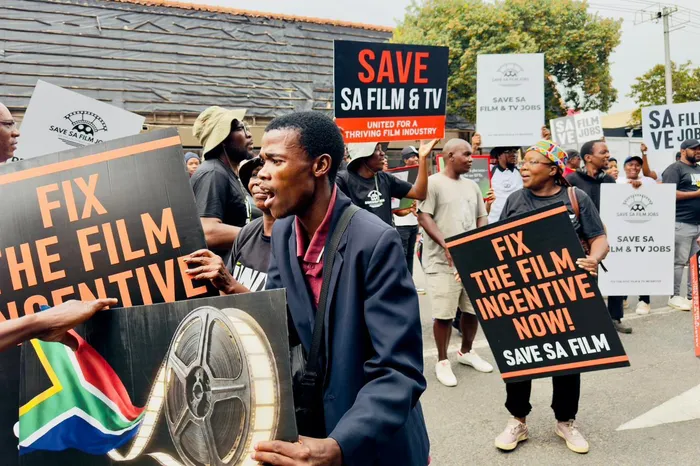
Participants in the Save SA Film Jobs campaign in Cape Town.
Image: Anita Nkonki
LIGHTS, camera, no action!
South Africa’s film and television industry is on pause, with creatives out of pocket as they wait to hear what Canal Plus intends after acquiring MultiChoice last year.
With microphones off and scripts silent, insiders warn that without a clear signal from the broadcaster, combined with ongoing Film Incentive delays, the local industry could tank, with the future of local languages, content and talent at risk.
Jade Gezane, General Secretary of the Independent Producers Organisation (IPO), says prolonged uncertainty is eroding investor confidence and diminishing South Africa’s competitiveness as a production destination of choice.
“Without confirmed approval, producers cannot close financing, access bank funding, or move projects into production, even if broadcaster contracts are in place. This leads to postponements, cancellations, and serious cash-flow strain, particularly for independent companies,” Gezane said.
The ripple effect of being in limbo has infiltrated the entire industry.
Cast, crew, post-production teams, and service providers who work project-to-project have been hard hit while it's also undermined financial security and livelihoods.
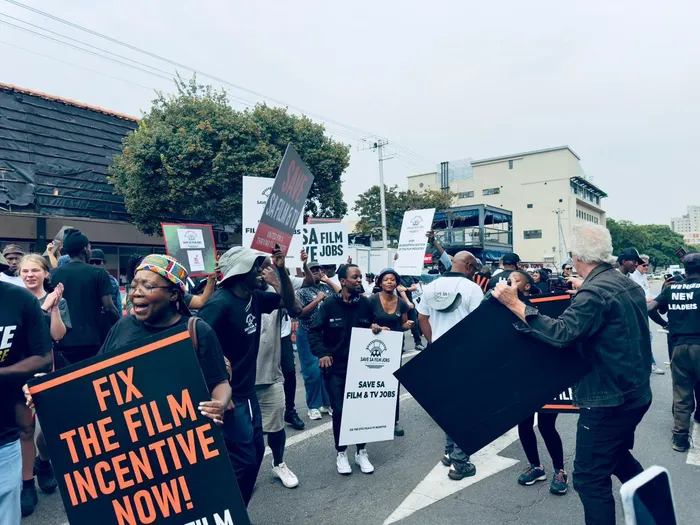
Participants in the Save SA Film Jobs campaign in Cape Town.
Image: Anita Nkonki
While South Africa’s natural beauty makes it a sought-after filming location, Gezane warns that the current stalemate could make the entire industry “disappear”. Emerging and smaller companies are likely to feel the impact most.
“The South African incentive is considered too risky for traditional lenders, and new entrants carry higher risk profiles, making it extremely difficult to secure loans,” she said. Projects stall, and skilled creatives are forced either to leave the sector or relocate to regions with more stable production ecosystems.
“Producers rely on confirmed incentive approvals to secure loans against film incentive positions in their finance plans. Without that certainty, lenders are unwilling to advance funding, leaving projects stalled or cancelled. This directly reduces work opportunities for production crews and creative professionals, many of whom depend on project-based income,” Gezane added.
Fears about the future of local content are rife and many have questioned if international content would be revisioned for local audiences, turning the country into a dumping ground for foreign content. The recent translation of a US production, Landman, into Afrikaans for the kykNET channel has intensified speculation.
Insiders warn that delays and risk-averse production decisions reduce opportunities for underrepresented languages, regional storytelling, niche genres, and emerging talent. In addition, South Africa’s ability to produce exportable intellectual property is also endangered.
Jack Devnarain of the South African Guild of Actors (SAGA) raised concerns that Canal Plus may prioritise European content over local productions. “While the MultiChoice channels were commissioning work for South African content, South African actors even then had no say in the contracts we were being offered. So these contracts were a complete buyout of all our rights including intellectual property rights. It blocked any kind of compensation for residual earnings through repeat broadcast fees or commercial exploitation fees, and MultiChoice MNet, Kyknet, and Mzansi Magic refused to engage with actors’ representative bodies like SAGA,” he said.
Right now the structural fragility of the local industry has also compounded the crisis.
As major broadcasters decrease the commissioning of local content, and the SABC faces financial instability, producers are highly exposed to commissioning cycles that can halt production.
They say access to finance is limited, and many commercial banks lack the expertise to lend against rebates, pre-sales, and long revenue cycles. Together, these factors make the ecosystem particularly vulnerable to incentive delays and market uncertainty.
Parliament’s Portfolio Committee on Trade, Industry and Competition this week promised to restore stability and confidence in the sector.
However, while the committee facilitates engagement, it does not allocate budgets or implement policy. Committee Chair Mzwandile Masina pledged that the conversation between government and industry will continue until solutions are found.
“We owe it to the thousands of South Africans whose livelihoods depend on this sector to ensure certainty and restore investor confidence,” Masina said. The committee recommended exploring alternative funding models, consistent incentive guidelines, and improved coordination between the DTIC and National Treasury. He stressed that support must go beyond financial assistance, providing guidance to help industry players comply with requirements.
The industry is also a key player in job creation and economic growth.
Last month, hundreds of South African film and television workers marched through Cape Town and Pretoria with a single message: “Fix our industry before it collapses.” The Save SA Film Jobs campaign saw demonstrators deliver a memorandum of demands to Minister of Trade, Industry and Competition Parks Tau, calling for immediate stabilisation and reform of the Film and Television Production Incentive. The protest highlighted a sector which was once viewed as the backbone of South Africa’s film economy but is now mired in bureaucratic delays, unpaid rebates, and stalled approvals.
MultiChoice (Canal Plus) had not responded by the time of going to print.